
Two November ballot issues for Virginia voters have deep roots in human rights.
By Philip Shucet
This November, Virginia voters will decide whether two basic rights, one long exercised and one still threatened, deserve protection beyond the reach of politics and the courts.
The tension over identifying and securing foundational rights is not new, reaching back to the nation’s founding and the framing of the Constitution. Which liberties are so fundamental that they should be put out of reach of shifting political majorities and left to the people to decide?
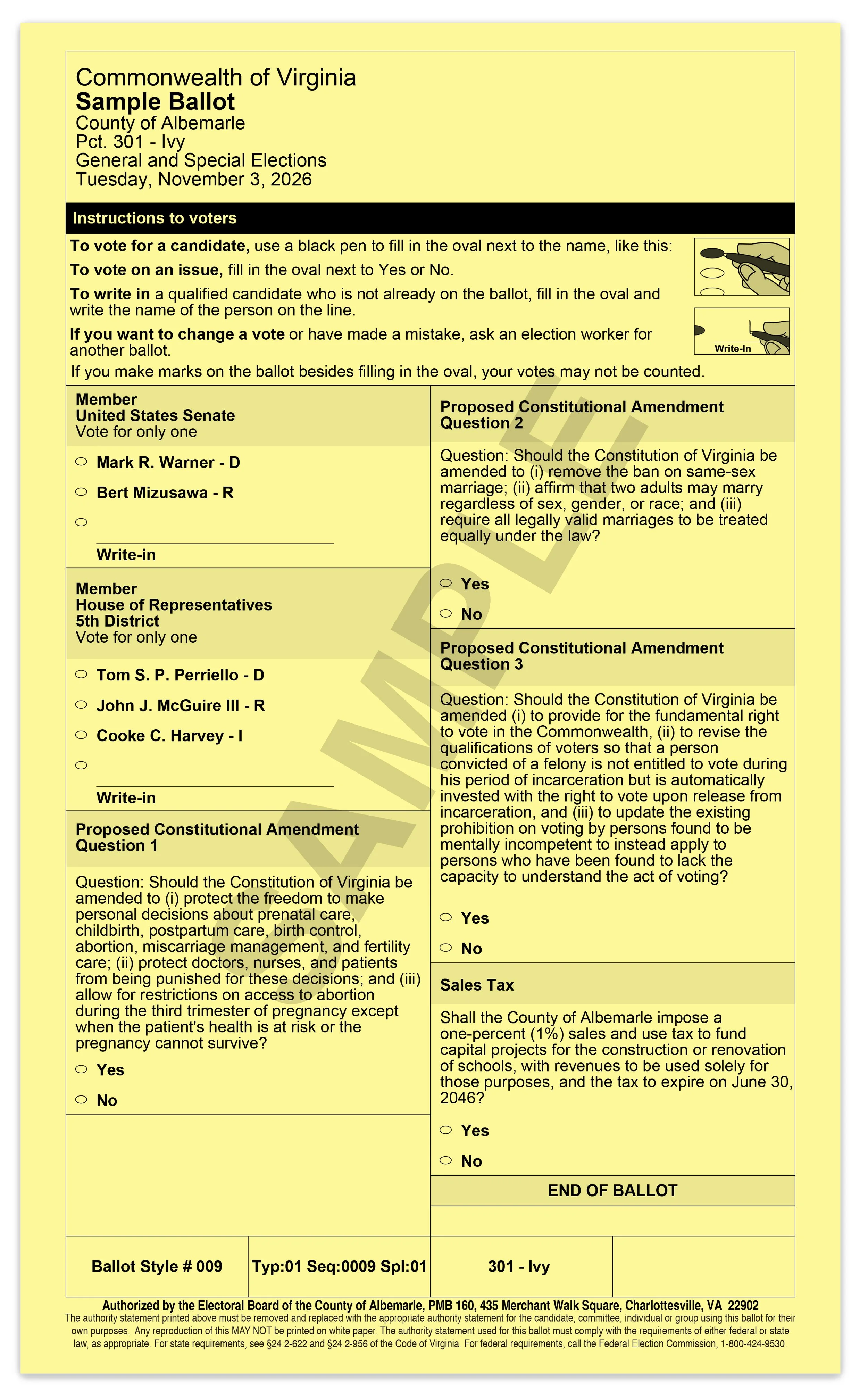
The first ballot question asks whether the state constitution should protect "the freedom to make personal decisions about prenatal care, childbirth, postpartum care, birth control, abortion, miscarriage management, and fertility care."
The second asks whether Virginia should remove its ban on same-sex marriage and treat all lawful marriages equally, regardless of sex, gender or race.
An approved amendment will be written into Article I of the Virginia Constitution, the state bill of rights.
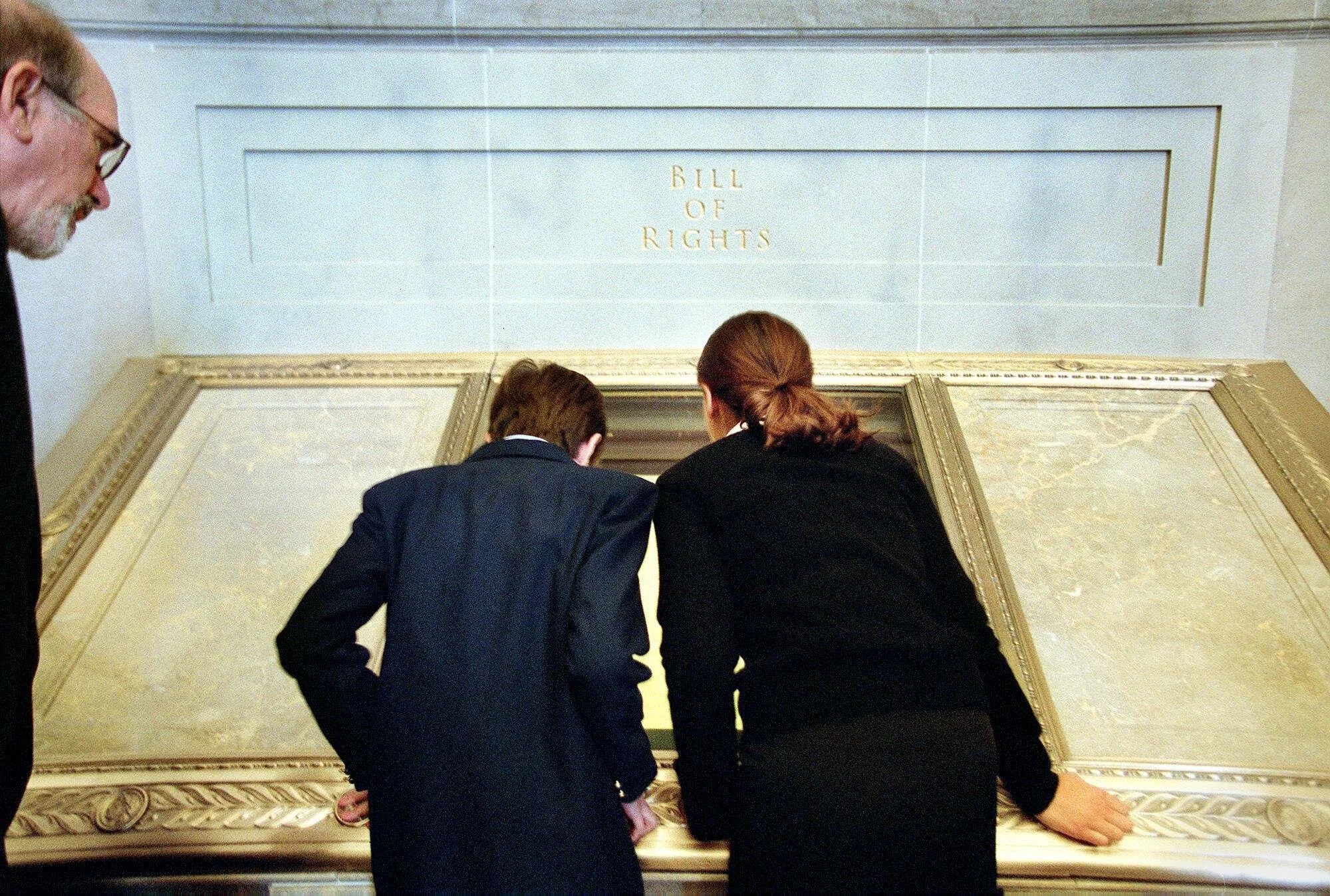
At the 1787 Constitutional Convention in Philadelphia, the framers debated whether to include a bill of rights in the federal Constitution. Just five days before the convention adjourned, Elbridge Gerry of Massachusetts proposed that "a Committee prepare a Bill of Rights." Virginia's George Mason seconded the motion. Mason had already written The Virginia Declaration of Rights in 1776 and believed that a bill of rights could be drafted in short order.
Roger Sherman of Connecticut objected. The new federal government possessed no power beyond what the Constitution expressly granted. "The Legislature [Congress] may be safely trusted," he said.
Called to a vote, Gerry's motion was unanimously defeated. Even Mason's home state of Virginia voted against the motion.
Mason and Gerry refused to sign the new Constitution largely because of the exclusion of a bill of rights. Mason quickly set his objections in writing and distributed them after the convention adjourned. His first objection: "There is no Declaration of Rights."
Mason persisted in Richmond.
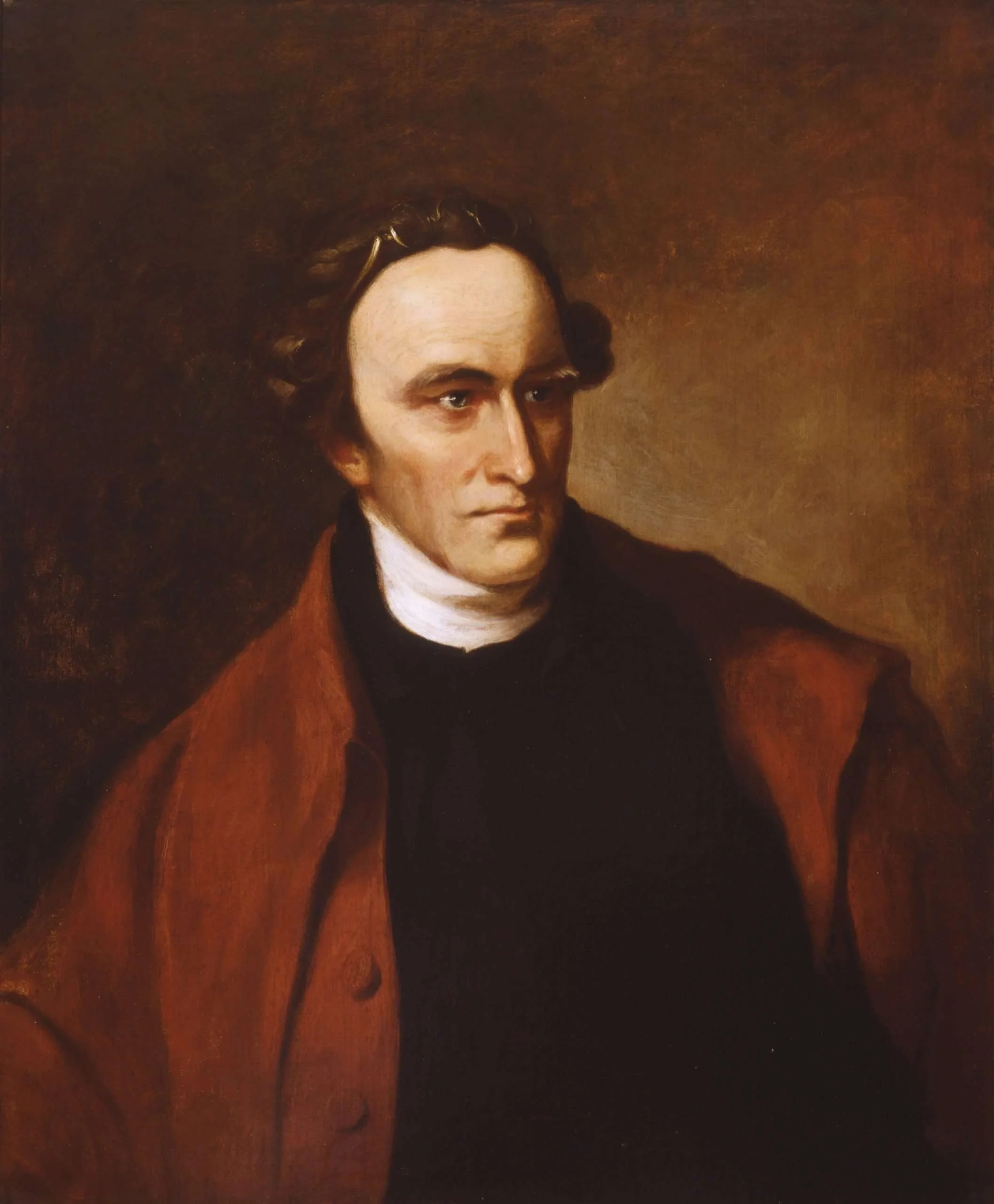
Patrick Henry. circa 1851 by Thomas Sully
At Virginia's 1788 ratifying convention, Mason repeated his position that certain rights retained by the people should be expressly declared. He pointed to the bill of rights already included in the Virginia constitution. Mason believed that the federal Constitution should also secure rights in a "plain, direct, unequivocal manner."
But it was Patrick Henry who pressed hardest. "Whereabouts do we stand with respect to a bill of rights?" he asked. "My mind will not be quieted till I see something substantial come forth in the shape of a bill of rights."
Henry was relentless throughout the convention, speaking on 17 of the convention's 22 days of debate, often more than once on the same day. For Henry, the fight was personal. He built his reputation by warning that power, once ceded to a distant government, was rarely returned. Henry saw a written bill of rights as insurance against a future government forgetting the liberties Virginians fought a revolution to secure.
As strongly as Henry argued for a bill of rights, James Madison argued against it. A bill of rights was "unnecessary and dangerous." Unnecessary, because the people retained the power to grant any rights not prohibited by the Constitution; dangerous, because to enumerate rights ran the risk of implying that any rights not granted were prohibited, Madison suggested.
Madison's objection was structural, not sentimental. He trusted the Constitution's design — its separation of powers and its limits on federal authority — to protect liberty on its own, and he worried that a written list of rights would function less as a floor than as a ceiling, with any right left off treated as surrendered.
Virginia narrowly ratified the Constitution. And before adjourning, the delegates adopted a declaration of 20 rights, drawn largely from Mason's 1776 language, to be considered by the new Congress as amendments to the Constitution.
From Richmond, the matter of a bill of rights moved to New York and the First Congress.
Madison sensed the politics of establishing the rights of citizens changing. He changed his stance and presented Virginia's list of rights to Congress in June 1789. Madison explained to the House of Representatives that the Constitution's opponents "disliked it because it did not contain effectual provisions against encroachments on particular rights."
A bill of rights operates by "excepting out of the grant of power those cases in which the Government ought not to act," Madison said. Some rights were so important, he argued, that to secure them they should be removed from the democratic process.
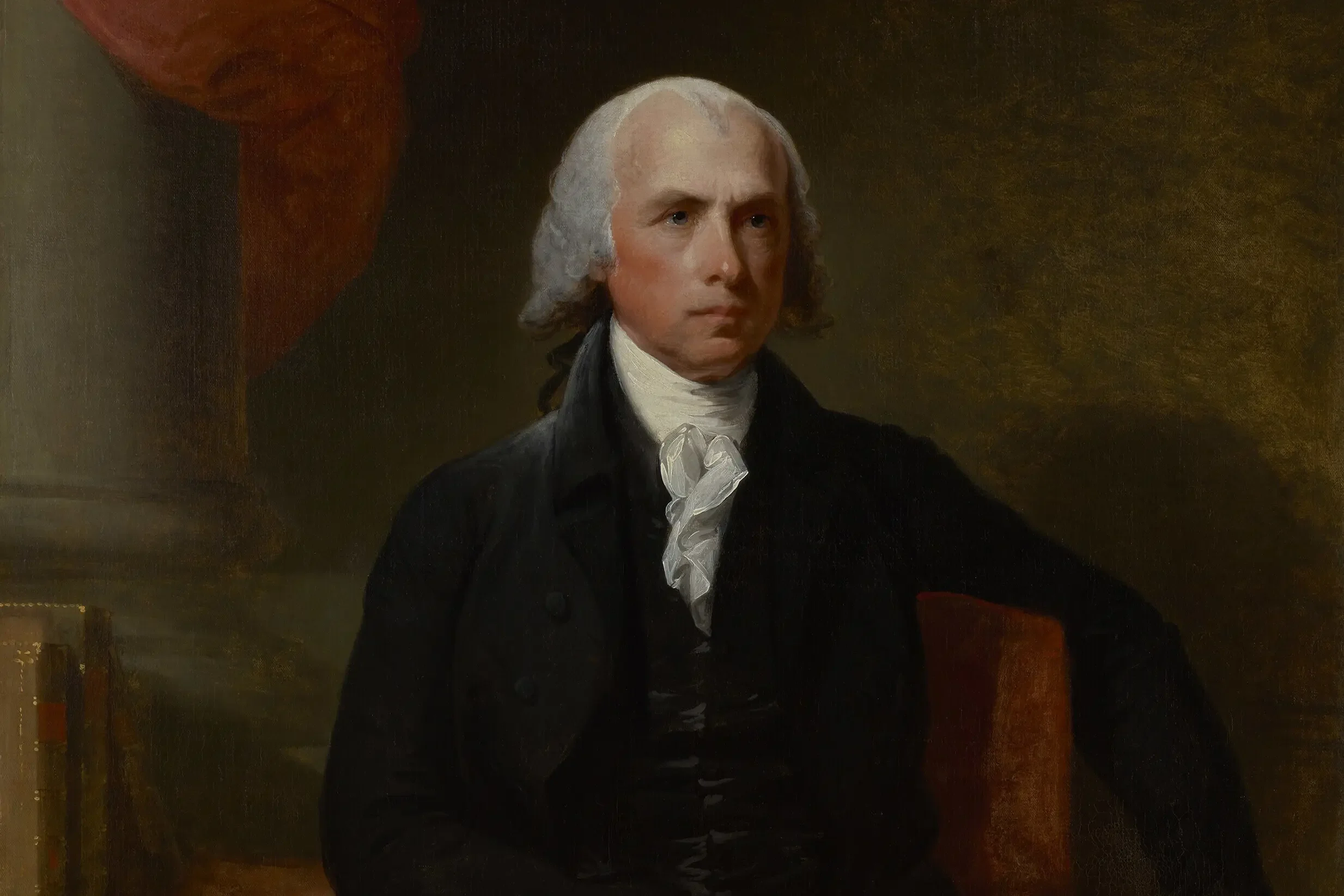
James Madison. circa 1805 by Gilbert Stuart.
In September 1789, two years after ratification of the Constitution, the First Congress adopted 12 amendments to the Constitution and sent them to the states for ratification. Ten of those 12 were ratified as the Bill of Rights we know today.
Today, Virginians are considering two contested rights, both with histories connected to judicial decision and inference.
For roughly 50 years, through Roe v. Wade, the Supreme Court treated ending a pregnancy as an inferred right based on the Due Process Clause of the Fourteenth Amendment. But in 2022, the Supreme Court reversed itself in Dobbs v. Jackson Women's Health Organization and returned the question, in the court's words, to "the people and their elected representatives."
Before Roe, 30 states banned abortion. After Dobbs, 25 states and the District of Columbia have acted to either protect or expand reproductive rights.
Since 2015, same-sex marriage has been a protected federal right through Obergefell v. Hodges. However, a conservative majority on the court could upend that decision; Justice Clarence Thomas wrote that Obergefell should be overturned.
Virginia voters in 2006 approved a constitutional ban on same-sex marriage. The ban is unenforceable but would take effect immediately if Obergefell were overturned.
Currently, 32 states, including Virginia, have either a statutory or constitutional ban, or both, on the books that prohibit same-sex marriage. These state bans would become enforceable if Obergefell were overturned.
At the nation’s founding, Federalists worried that naming a right risked implying that every unnamed right mattered less. Madison answered with the Ninth Amendment: listing some rights, it says, does not "deny or disparage others retained by the people."
The Tenth Amendment added a second safeguard, reserving to the states and the people any power the Constitution did not specifically grant to the federal government.
Today, the same logic applies to Virginia's constitution. Adding reproductive rights and marriage equality to Article I would not diminish any right Virginians already hold. It would simply place those two rights, specifically, beyond the reach of a future legislature or court.
This November, Virginia voters will choose whether to protect two individual rights.
To protect the right of a person to make their own reproductive decisions.
To protect the right of same-sex partners to marry and enjoy equal treatment under the law.
The framers were champions of compromise. They removed shifting politics from the rights they considered foundational. At the same time, they gave the people the power to secure additional rights.
Reach Philip Shucet at philip.shucet@philipshucet.com
Philip Shucet spent decades running large public institutions — the Virginia Department of Transportation and Hampton Roads Transit — during periods when they were under strain. He understands how they are built, how they break down, and what it takes to rebuild them. He is a graduate of Virginia Tech and the Columbia University Graduate School of Journalism. He has begun doctoral research in law and policy.