
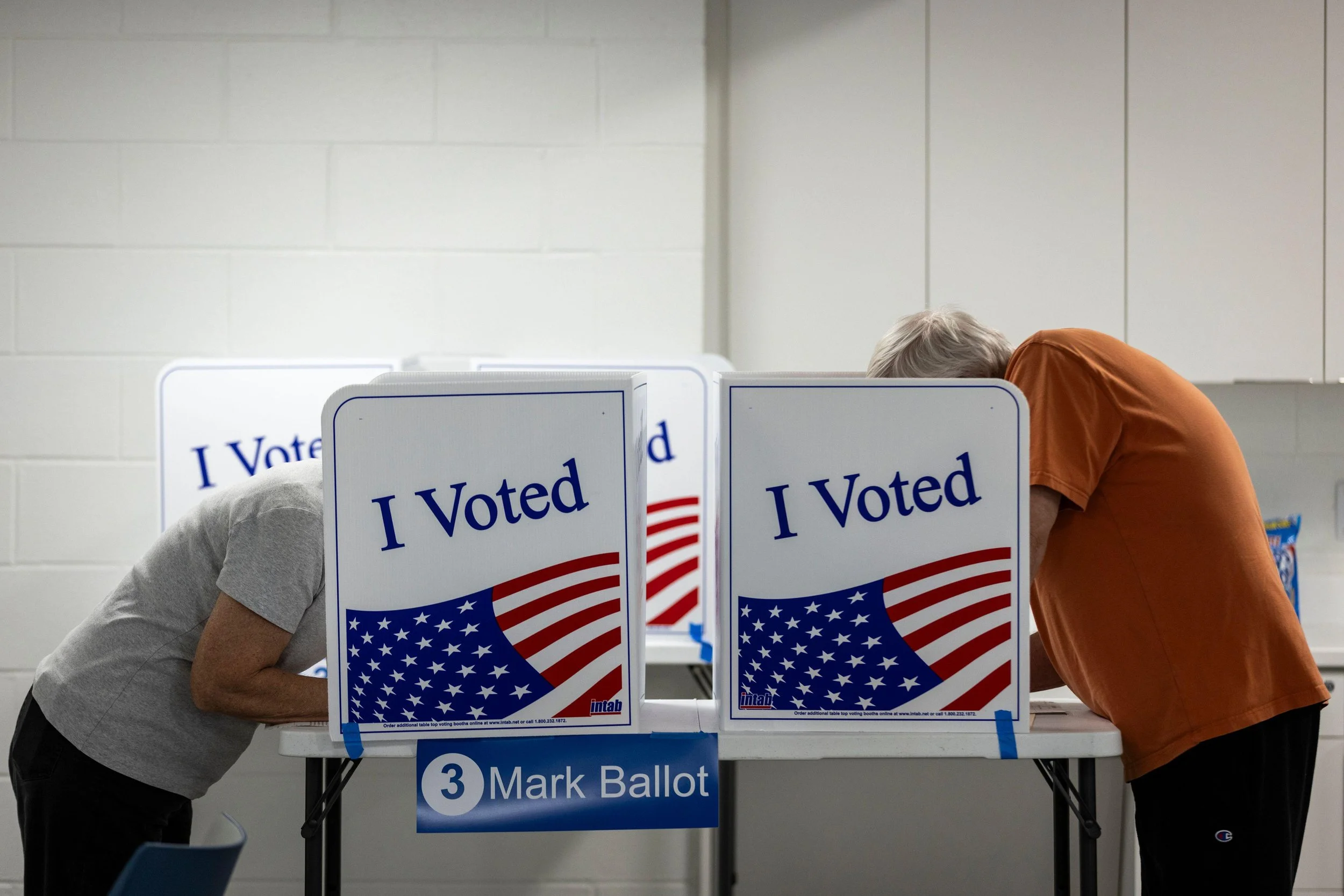
The Founders deadlocked over how a President should be elected. Virginia’s leaders feared a popular vote.
By Philip Shucet
Hillary Clinton beat Donald Trump by more than five percentage points in Virginia in 2016, and collected more Virginia votes than Barack Obama four years earlier. Nationally, Clinton racked up nearly three million more votes than Trump.
A commanding performance. But in presidential elections, winners can still be losers.
The keys to the Oval Office went to Trump. Clinton lost the Electoral College 304–227, the fifth time in American history the popular vote winner lost the presidency.
After 239 years, the United States is still wrestling with and debating new proposals about how to elect a president.
At the Constitutional Convention in May 1787, two opposing views threatened to splinter the young country. Delegates argued whether elected officials or the people should decide the presidency. How much power, they argued, could voters be trusted with?
The Virginia Plan, drafted by James Madison and presented by Virginia Gov. Edmund Randolph, suggested that the national executive be selected by the national legislature. That launched a fight that would not be solved until the final days of the convention.
James Wilson of Pennsylvania, a Scottish immigrant who earned a reputation as a brilliant lawyer, immediately argued for popular election of the president. Popular vote would “produce more confidence among the people," Wilson said.
Gouverneur Morris, another Pennsylvania delegate, grew up on a family estate in New York. He favored a strong central government and believed a president chosen directly by the people would be independent of, and not manipulated by, factions in the legislature. “The Executive should be the guardian of the people, even of the lower classes, against legislative tyranny,” Morris said.
But George Mason, a Virginia aristocrat, objected. Mason was suspicious of centralized government and believed the country would grow too large for people to make informed choices between national candidates. It would be “as unnatural to refer the choice of a proper character for chief Magistrate to the people, as it would to refer a trial of colours to a blind man, " Mason said.
Elbridge Gerry of Massachusetts also opposed popular election. Two experiences informed his decision. A mob, fearing infection, burned down a hospital he built to inoculate people against smallpox. Later, Shays' Rebellion in 1786 — a debtor uprising in his home state — shook him deeply.
Gerry was blunt at the convention. "The evils we experience flow from the excess of democracy,” he said, adding the people “are daily misled into the most baneful measures and opinions by the false reports circulated by designing men."
And there was a deeper political problem. Virginia and the southern states would be disadvantaged by a popular vote.
Madison’s notes bare his own internal struggle. While he initially believed the president should be elected by the legislature, he became convinced that direct election “with all its imperfections” was the best way to elect a president. But Madison understood the dilemma Virginia faced. Slaves could not vote.
Hugh Williamson, a North Carolina physician, told the delegates that people would likely vote for a man from their own state and that the largest state would elect the president. “This will not be Virginia, however. Her slaves will have no suffrage.”
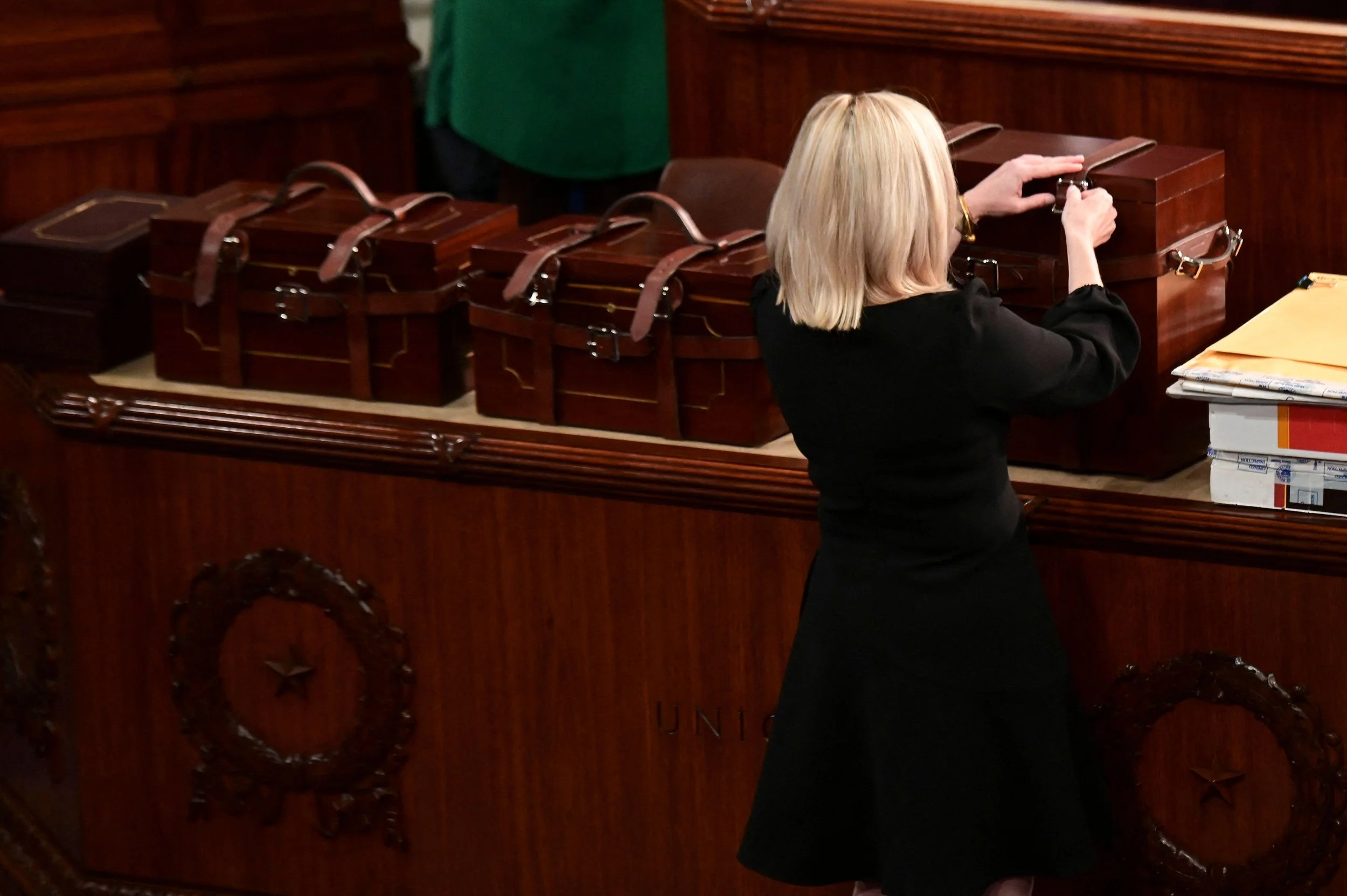
Electoral College ballot boxes arrive to a joint session of Congress to count the Electoral College votes of the 2020 presidential election in the House Chamber in Washington, D.C., U.S., on Wednesday, Jan. 6, 2021. Congress is meeting to certify Joe Biden as the winner of the 2020 presidential election, with scores of Republican lawmakers preparing to challenge the tally in a number of states during what is normally a largely ceremonial event. Photo by Erin Scott/Pool/ABACAPRESS.COM
Madison ultimately shifted his support to the Electoral College.
Disagreements persisted until the delegates came to a complicated compromise in early September. One nobody liked.
Each state would be granted a number of electors equal to the sum of its representatives and senators. State legislatures would decide how the electors were chosen. The electors would meet on the same day, but separately in their own states, eliminating any opportunity to coordinate.
Each elector cast two votes for president. At least one vote had to be for a person from a different state. The candidate receiving the greatest number of votes, if that number constituted a majority of all electors appointed, became president. The candidate finishing second became vice president.
If no candidate reached a majority, the House of Representatives would choose the president from the five candidates with the highest vote totals. Each state delegation would cast a single vote regardless of the state's size. The Senate would choose the vice president from the top two remaining candidates.
The Electoral College was adopted into the Constitution.
After only three elections, the College produced exactly the crisis the delegates hoped to prevent.
In 1800, Thomas Jefferson and Aaron Burr ran as a Republican ticket: Jefferson for president, Burr for vice president. Every Republican elector cast both votes for both men. The result was a tie; 73 electors cast 73 votes for each, which threw the decision to the House. It took 36 ballots and the reluctant intervention of Alexander Hamilton before Jefferson prevailed.
The Twelfth Amendment, ratified in 1804, tried to fix the problem. Electors would no longer cast two votes for president and instead would cast one vote for president and one for vice president. If no presidential candidate reached a majority, the House would choose from the top three rather than the top five. The Senate would choose the vice president from the top two.
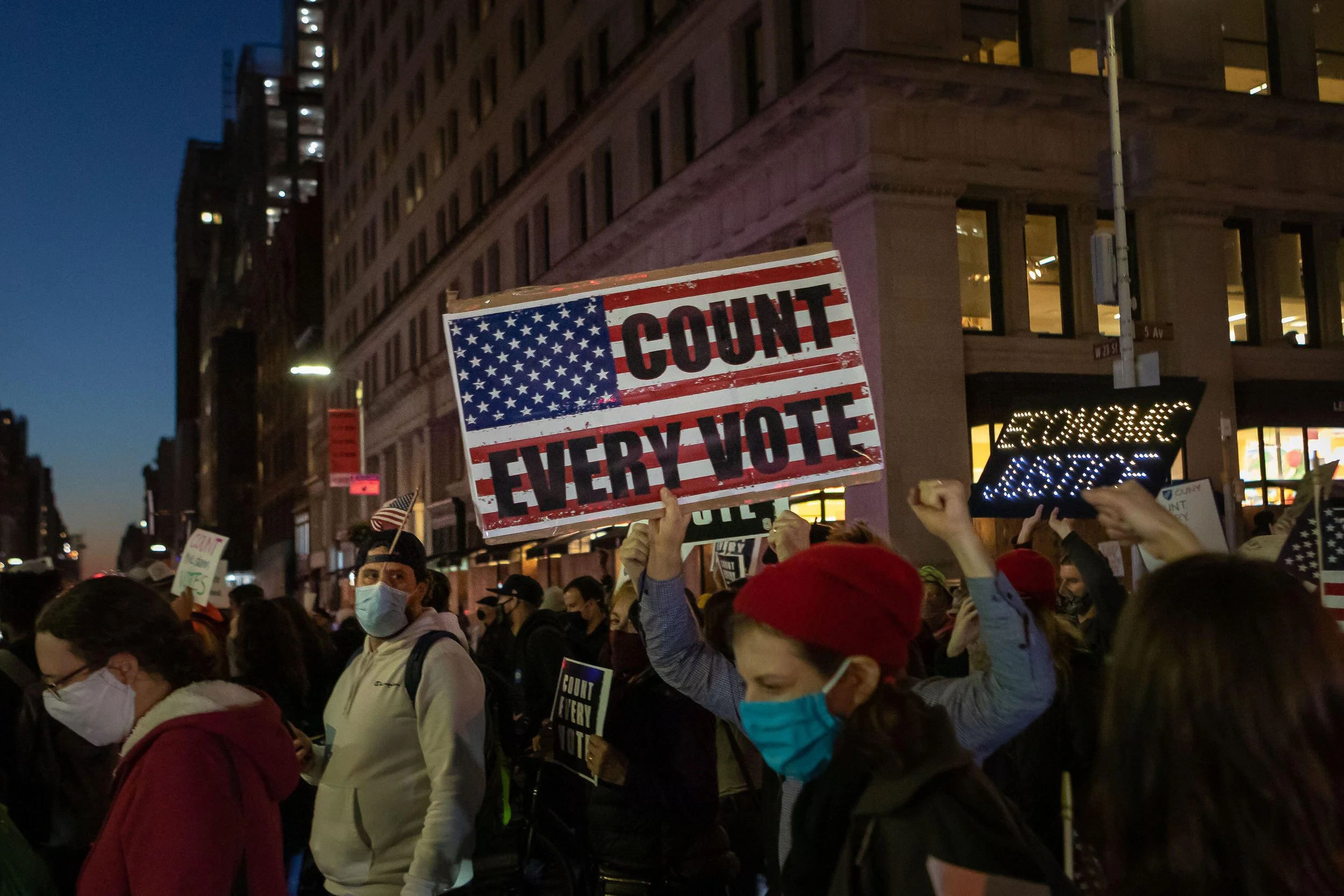
On November 4, 2020, with the presidential election still not decided, hundreds of protesters in NYC took to the streets to denounce Donald Trump's attempt to stop the counting of votes in battleground states. Photo by Michael Nigro/Sipa USA Alamy Live News
Subsequent changes have been piecemeal. The Fourteenth Amendment, ratified in 1868, tied electoral vote apportionment to total population, including full representation for former slaves. The Twenty-Third Amendment extended three electoral votes to Washington D.C. The Supreme Court's 2020 Chiafalo decision confirmed states may bind electors to their pledged vote. And in response to the January 6 insurrection, the Electoral Count Reform Act of 2022 clarified Congress's largely ministerial role in certification while raising the bar for objections.
In April 2026, Gov. Abigail Spanberger, a Democrat, signed a bill into law to include Virginia in the National Popular Vote Interstate Compact. Virginia became the 19th state to join.
The National Popular Vote Interstate Compact is not a constitutional amendment, and does not abolish the Electoral College. It works inside the existing electoral system while potentially rewiring the outcome.
Each state that joins the compact agrees to award all of its electoral votes to whichever candidate wins the national popular vote. The compact only goes into effect after states controlling at least 270 electoral votes have signed on.
Those supporting the compact see the logic as straightforward. The Constitution gives each state the power to direct how its electors are awarded. If states controlling a majority of electoral votes agree to move in unison, the popular vote winner becomes president.
But the 1787 debate persists.
The compact cuts both ways.
In 2000, Virginia voted for George W. Bush by eight percentage points. But Bush lost the national popular vote to Al Gore.
Under an active popular vote compact, Virginia’s electors would have been bound to Gore, contrary to the will of Virginia's voters.
In 2016, Hillary Clinton won Virginia but lost the Electoral College. Under an active compact, the outcome would have flipped. But the override would have hit hard in unexpected states won by Trump, including Michigan and Pennsylvania.
In 2024, the Virginia dynamic was reversed. Kamala Harris carried Virginia by nearly six points, but Virginia’s electors would have gone to Trump, the winner of the popular vote.
The 19 states that have joined the compact control 222 electoral votes. States controlling 48 more are needed to reach the 270 threshold. The states most likely to push it over the line — Pennsylvania, Michigan, Wisconsin, Arizona, Georgia — are also the states whose electoral votes carry the most weight under the current system. Their incentive to join is the weakest.
Virginia has been on both sides of this debate, at the founding, in the courtrooms, and now in the compact. James Madison left Philadelphia believing electors were a necessary concession, not a solution. More than two centuries later, 19 states are trying to make the popular vote work inside the very framework Madison reluctantly helped build to prevent it.
The compromise is still being compromised.
Reach Philip Shucet at philip.shucet@philipshucet.com
Philip Shucet spent decades running large public institutions — the Virginia Department of Transportation and Hampton Roads Transit — during periods when they were under strain. He understands how they are built, how they break down, and what it takes to rebuild them. He is a graduate of Virginia Tech and the Columbia University Graduate School of Journalism. He has begun doctoral research in law and policy.