
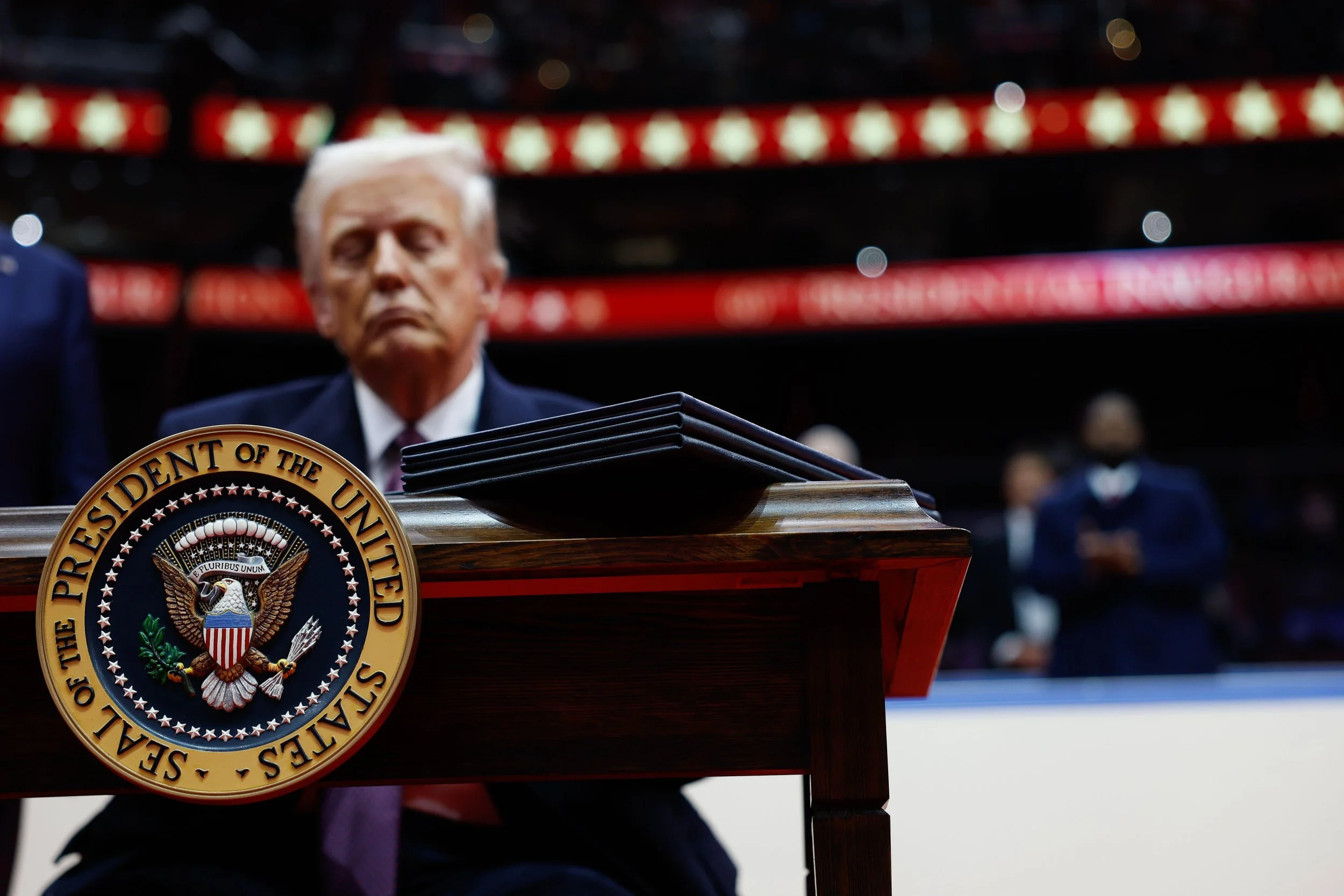
A strong executive worried the nation’s Founders. Centuries later, the debate continues.
By Philip Shucet
Tyranny was no stranger to the Founders.
Patrick Henry warned Virginia's constitutional delegation in 1788: "This Constitution is said to have beautiful features; but when I come to examine these features, sir, they appear to be horribly frightful . . . It squints toward monarchy . . . Your President may easily become a king."
That warning echoes today.
In 2002, George W. Bush authorized warrantless surveillance of American citizens in direct conflict with a statute Congress enacted to govern surveillance. Barack Obama said at a 2011 Univision town hall that suspending deportations through executive order was “just not the case” because laws prevented it. After Congress failed to change the law, Obama signed an executive order protecting undocumented immigrants who came to the U.S. as children.
Donald Trump, in his second term, refused to spend money Congress appropriated despite federal court rulings that the freeze is unlawful. He removed independent agency officers protected by a 90-year-old legal precedent. Both matters are now before the Supreme Court.
Trump imposed sweeping tariffs under the International Emergency Economic Powers Act (IEEPA), which the Supreme Court struck down 6-3 in February 2026, holding that IEEPA does not authorize the president to impose tariffs. Within hours of that ruling, Trump imposed a new 10% tariff under Section 122 of the Trade Act of 1974, which permits such tariffs for up to 150 days. States and businesses have also challenged that claimed authority.
America’s Founders feared the concentration of power, especially in the executive. In 1776, the Continental Congress met to protest the despotism of King George III and emerged with the Declaration of Independence.
A decade later, the tyrant was gone but the Articles of Confederation governing the young country were failing. A single congressional chamber held all national authority. There was no independent executive and no national judiciary. The states retained too much power; the federal government too little.
Before arriving in Philadelphia in May 1787 for the Constitutional Convention, Virginia’s James Madison outlined a remedy: divide federal authority among three distinct branches of government — legislative, executive and judicial — each capable of resisting the encroachment of the others.
On May 29, Virginia Gov. Edmund Randolph introduced Madison’s Virginia Plan to the convention. Randolph articulated the Articles’ failures, telling the delegates the Articles created “the prospect of anarchy from the laxity of government every where.”
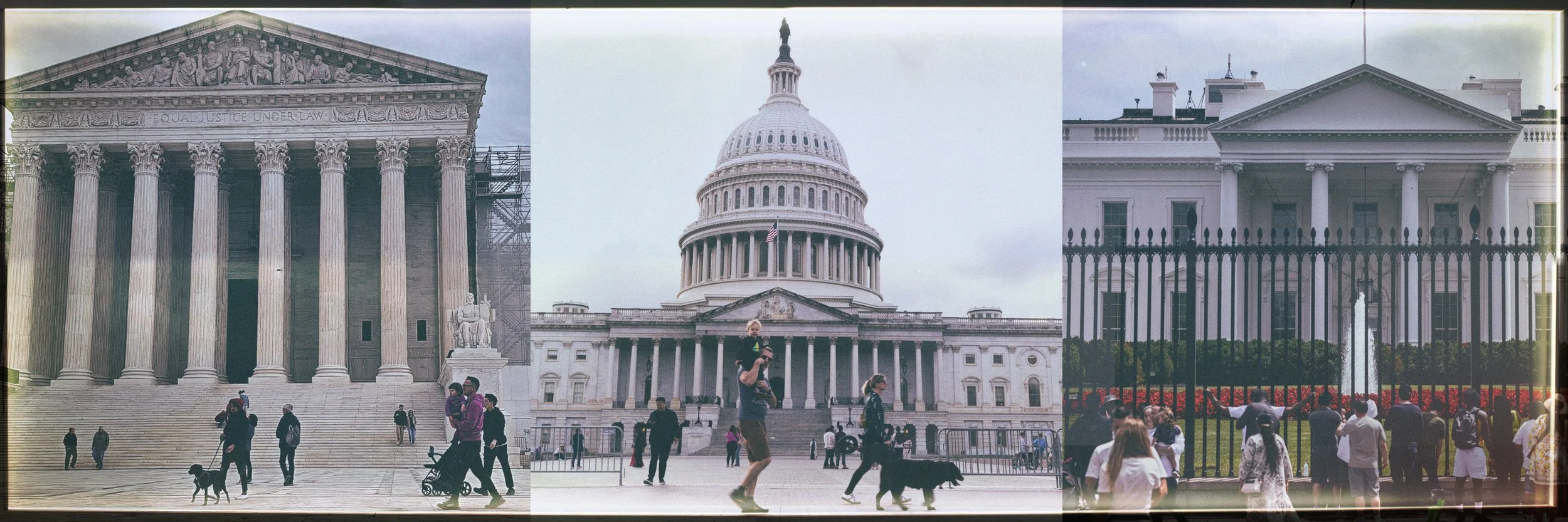
James Madison argued that the checks and balances written into the Constitution by the three separate but equal branches of government - the court, the legislature and the executive branch-would be sufficient to protect the new nation from monarchy. Triptych by Christopher Tyree // VCIJ. Images source // Sipa USA/Alamy Live News.
The Framers emerged from the convention with an elaborate set of checks and balances written into the new Constitution. Congress had the power to declare war, control the purse and make laws. The president could veto laws, which Congress could overturn with a two-thirds majority in each chamber. The president would execute the law and command the military, but required Senate confirmation for major appointments and treaties. The courts would interpret the law, but judges would be appointed by the president with Senate consent and would be subject to impeachment for misconduct. Each branch was given the means, the motive and the power to resist the others.
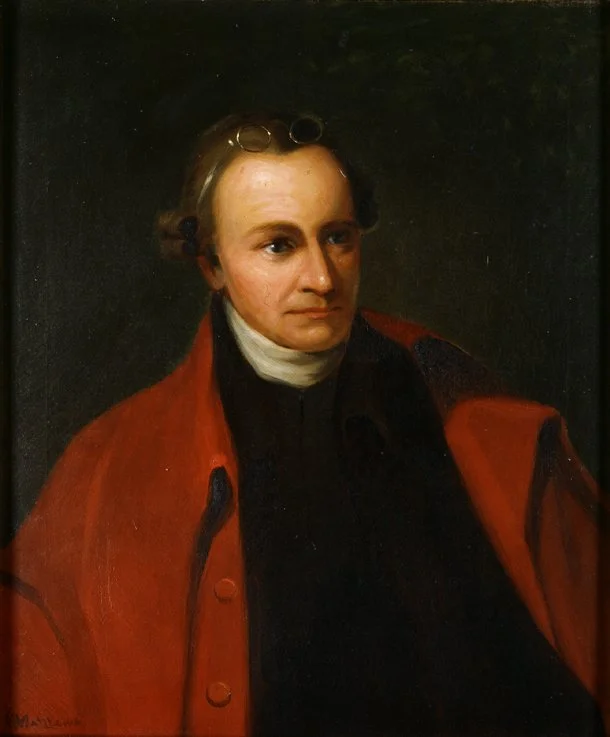
Portrait of Patrick Henry by George Bagby Matthews, circa 1861.
Yet fears of concentrated power carried over from the Philadelphia convention to the ratification conventions in all 13 states.
In Virginia, Henry sounded the alarm. Inside the wooden New Academy building on Richmond’s Shockoe Hill, Henry warned the 170 delegates and spectators packed into the galleries. “Where are your checks in this government?" he asked. "If your American chief be a man of ambition and abilities, how easy is it for him to render himself absolute!”
Virginia’s George Mason, who refused to sign the Constitution in Philadelphia, cautioned that the House could not prevent the president and Senate from forming a dangerous alliance.
"The executive and legislative powers, thus connected, will destroy all balances,” Mason said. “In its present form, the guilty try themselves. The President is tried by his counsellors. He is not removed from office during his trial. When he is arraigned for treason, he has the command of the army and navy, and may surround the Senate with thirty thousand troops."
Henry pressed the danger to future generations. “If you give too much power to-day, you cannot retake it to-morrow, for to-morrow will never come for that purpose.”
At every turn, Madison answered Henry's and Mason's objections in the crowded Richmond hall. The president could not spend without Congress. "The purse is in the hands of the representatives of the people," he said. The courts were independent, appointed through a process requiring agreement between the executive and the Senate, and empowered to interpret the law regardless of who held the other offices.
Henry feared the structure would be tested immediately. Ambition, he said, does not wait for permission.
Trump and his allies have taken an expansive — critics say limitless — interpretation of executive power.
According to an NBC News tally, Trump issued 229 executive orders in the first 365 days of his second term, a pace exceeded among modern presidents only by Franklin Roosevelt when mobilizing the country for World War II.
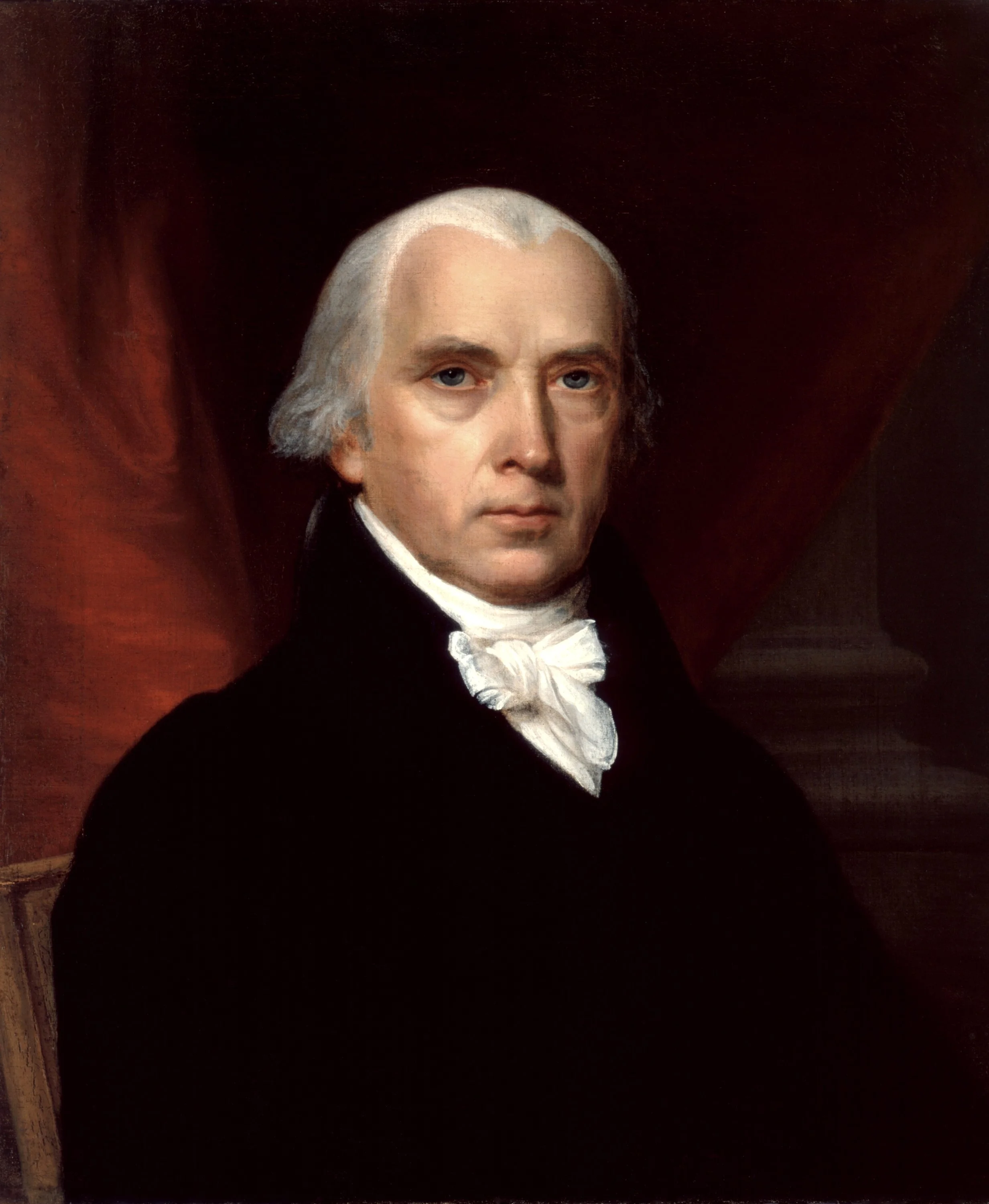
Portrait of James Madison by John Vanderlyn, 1816.
No Trump executive order has been overturned through congressional legislation. Republican members of Congress have voted nearly unanimously in support of the administration's positions on tariffs, agency removals, and spending freezes. A handful of congressional votes to rebuke Trump’s orders have failed.
The courts have been far from unanimous on the same questions.
Erwin Chemerinsky, writing in SCOTUSblog in January 2026, counted 358 lawsuits challenging Trump administration actions filed by the end of December 2025. The Supreme Court issued at least 25 rulings on Trump administration actions in the first year. The administration won the one case decided on the merits after full briefing and oral argument, Trump v. CASA, in which the court held in a 6-3 ruling that federal district courts cannot issue nationwide injunctions.
Henry warned that surrendered power is rarely reclaimed. Mason warned that an unchecked executive aligned with a compliant Senate would destroy the balance of power. Madison bet that the structure of the Constitution itself, the interlocking means, motives and powers of the three branches, would hold.
The centuries-old debate that began in Philadelphia and Richmond continues. The Founders designed a system that could stop a power-hungry executive — if Congress and the courts choose to use it.
Reach Philip Shucet at philip.shucet@philipshucet.com