
Republicans axed a $7 billion federal program to bring renewable energy projects into low income communities. Virginia’s planning for the grants had already begun.
By Elizabeth McGowan
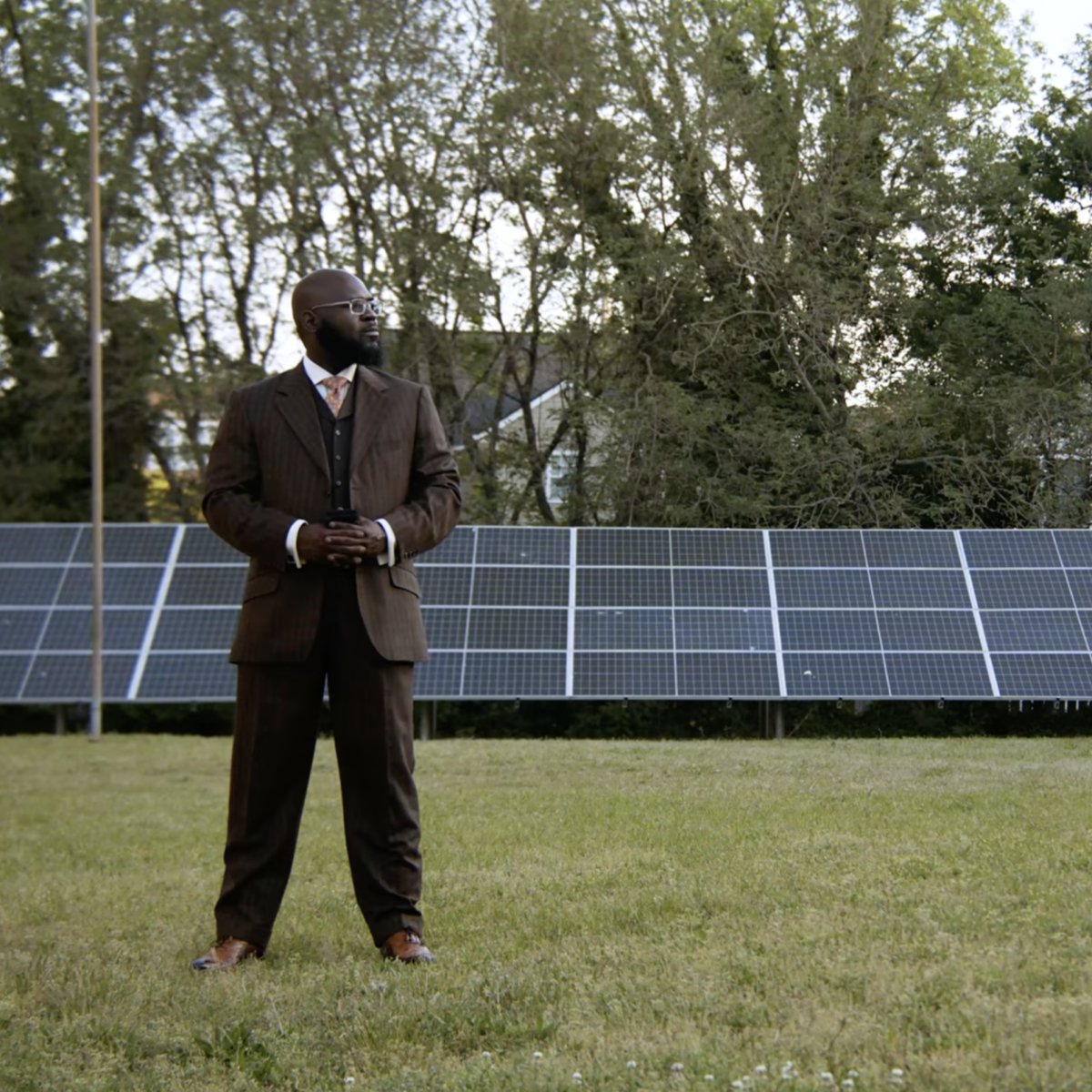
Norfolk pastor Brandon Praileau knows firsthand that solar leads to savings.
His congregation shrank its monthly electric bills by one-fifth since a 10.1-kilowatt array of ground-mounted panels adjacent to Wesley Union A.M.E. Zion Church in Hunter’s Square went online in early 2021.
That’s why Praileau is troubled that the President Donald Trump administration continues to block thousands of low-and moderate-income Virginians from tapping into solar and battery technologies designed to boost affordability.
An ambitious, federal $7 billion Solar for All program was terminated in July 2025 when Trump signed H.R. 1 into law. Its fate is unclear even after two federal judges, in separate rulings, ordered the money restored in late September.
Virginia’s share of Solar for All energy grants was $156 million.
However, the commonwealth spent just $730,000 on planning before the new administration cut off the remaining money, according to a state Department of Energy official.
Virginia was one of the award recipients nationwide that opted to spend a year, beginning in July 2024, designing a plan for distributing the money before spending the next four years executing it.
“I 100% agree with how Virginia approached it,” Praileau said. “But doing the right thing meant we were never able to draw down on the money because it was stripped away.”
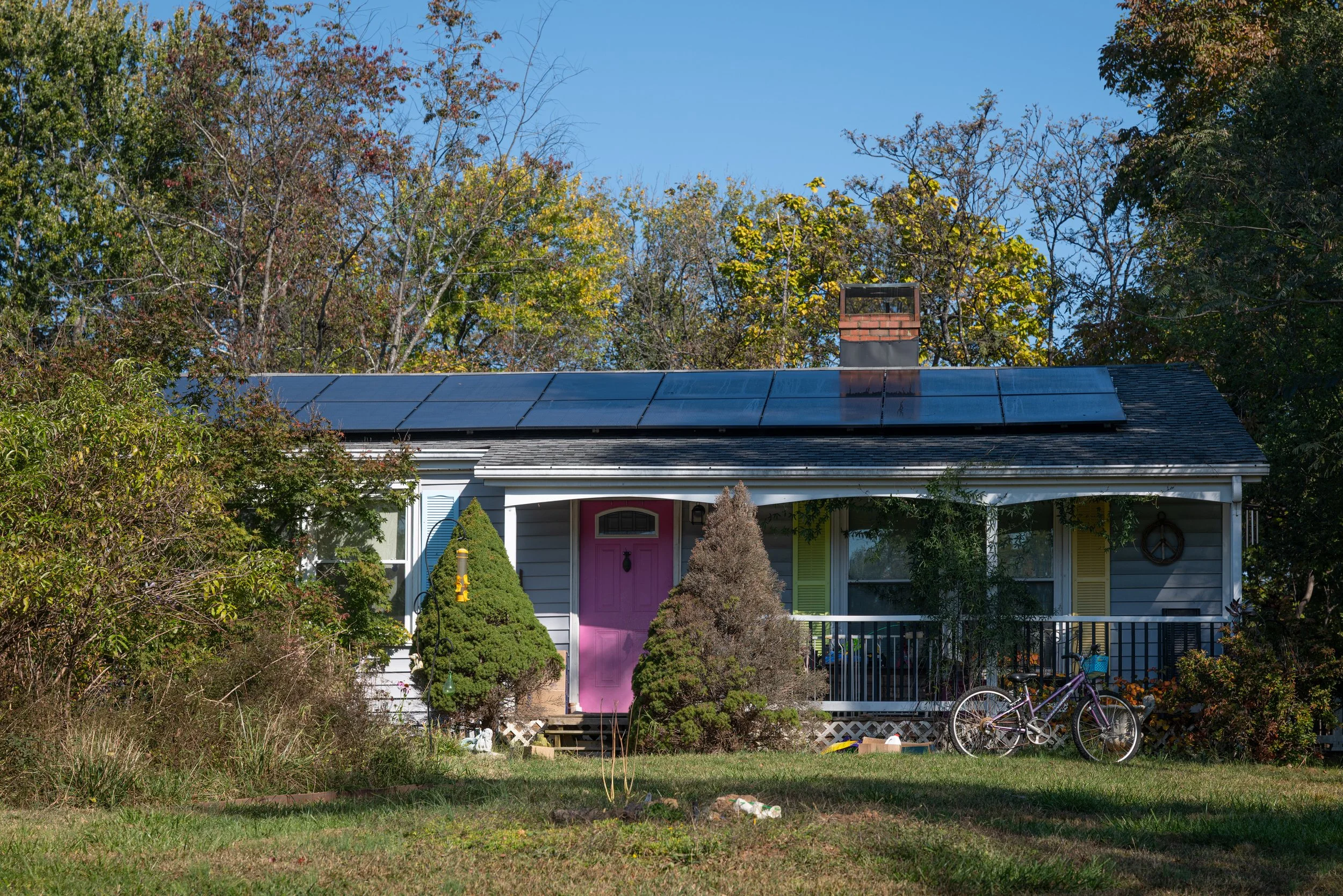
A house in rural Albemarle County with solar panels. October 27, 2026. Photo by Christopher Tyree
Virginia’s Department of Energy was among 60 entities—including states, territories, tribal nations and the nation’s capital—slated to receive Solar for All money intended to help at least 900,000 needy households save ratepayers nationwide upward of $350 million on their utility bills over a five-year period ending in 2029, according to estimates by the Biden administration’s Environmental Protection Agency.
Back in July 2025, Praileau was barely 18 months into his new day job as the Virginia program director for the nonprofit Solar United Neighbors. Early on at SUN, he had been selected to join Virginia’s Solar for All advisory group. Its 15 members, from all facets of the solar industry, were tasked with shaping all components of the commonwealth’s program.
It was especially harsh when Solar for All was canceled, he said, because SUN had hired him for his environmental justice savvy.
“For low-income folks, this kind of disappointment is akin to what they’re used to,” Praileau said in an interview. “A promise is made, then they’re told it’s not going to happen. Once again, the underserved get left behind.”
Last July’s knockout blow to Virginia came as state energy officials were on the verge of beginning a second round of interviews among applicants seeking to coordinate Solar for All projects. SUN, which had partnered with Greentech Renewables, was among those who had applied.
“Before it was snatched back, there was palpable excitement about an opportunity to close the gap on who could participate in the clean energy transition,” Praileau said.
Virginia’s proposal had called for dividing its $156 million Solar for All allotment into several buckets.
Some $49 million would go toward installing small-scale solar arrays atop 6,400 single-family homes. One federal requirement was that the panels had to help each household reduce its electricity bill by at least 20%.
Another $49 million was targeted to outfit 4,480 multifamily homes and apartments with solar panels and battery storage, allowing residents access to power during grid outages.
The remaining $58 million was earmarked for connecting solar systems to the grid, developing a workforce and catalyzing shared-solar projects. Rooftop panels aren’t practical for all homes, so larger, community-based projects can allow neighborhoods equal benefits by sharing array access.
Congress folded Solar for All into an enormous clean energy transition initiative when it passed the all-encompassing Inflation Reduction Act in 2022.
By Aug. 7, 2025, U.S. EPA Administrator Lee Zeldin announced that his agency was halting the $7 billion program. “The bottom line is this,” Zeldin posted on social media. “EPA no longer has the statutory authority to administer the program or the appropriated funds to keep this boondoggle alive.”
The Southern Environmental Law Center and several other conservation and watchdog organizations filed a lawsuit on behalf of SUN and labor and justice groups.
In a September ruling in the U.S. District Court of Rhode Island, Judge Mary McElroy said that H.R. 1 did not convert Solar for All money into a lump-sum amount subject to EPA discretion.
McElroy, a Trump appointee, wrote that the decision to terminate the program was “contrary to law and in excess of the EPA’s authority.”
Later in September, U.S. District Court Judge Tanya Chutkan for the District of Columbia reached a similar verdict in a separate lawsuit filed on behalf of grant awardees.
The EPA has 60 days to appeal those rulings; the agency has not yet begun that process.
“Right now, we’re at the mercy of EPA following through on these judges’ orders,” Praileau said about the future of Solar for All. “But the money has been frozen. Even if EPA doesn’t appeal, how long would it take to unfreeze it, or will they even comply with the orders at all?”
In Virginia, the solar-installation schedule was set to operate from December 2025 through December 2029.

Robin Dutta, executive director of the Chesapeake Solar and Storage Association.
Robin Dutta, executive director of the Chesapeake Solar and Storage Association, laments a lost opportunity to reach low-income Virginia communities that are traditionally much harder to serve.
Rural and urban residents burdened with disproportionately high utility bills range from elderly homeowners to young families in apartments where the breadwinners are working two or three jobs and barely making ends meet.
“It’s not about our industry, but it is about what we are trying to do,” Dutta said. Obliterating Solar for All “reveals how the federal government is more interested in outdated energy services … than it is in helping improve people’s affordability.”
Praileau, pastor of his Norfolk church since 2018, recognizes that lower electric bills would allow Solar for All recipients some wiggle room in their household budgets.
Savings from solar at his church—battery storage was added last year—allowed him to create a long-desired contingency fund that helps congregants pay rent and also expands ministry outreach.
For some Virginians, saving $75 to $100 a month on an electric bill might not seem consequential, Praileau said.
“But for those who are struggling, that could be the difference between getting affordable daycare, buying groceries or paying for medicine.”
Reach Elizabeth McGowan at elizabeth.mcgowan@whro.org.