
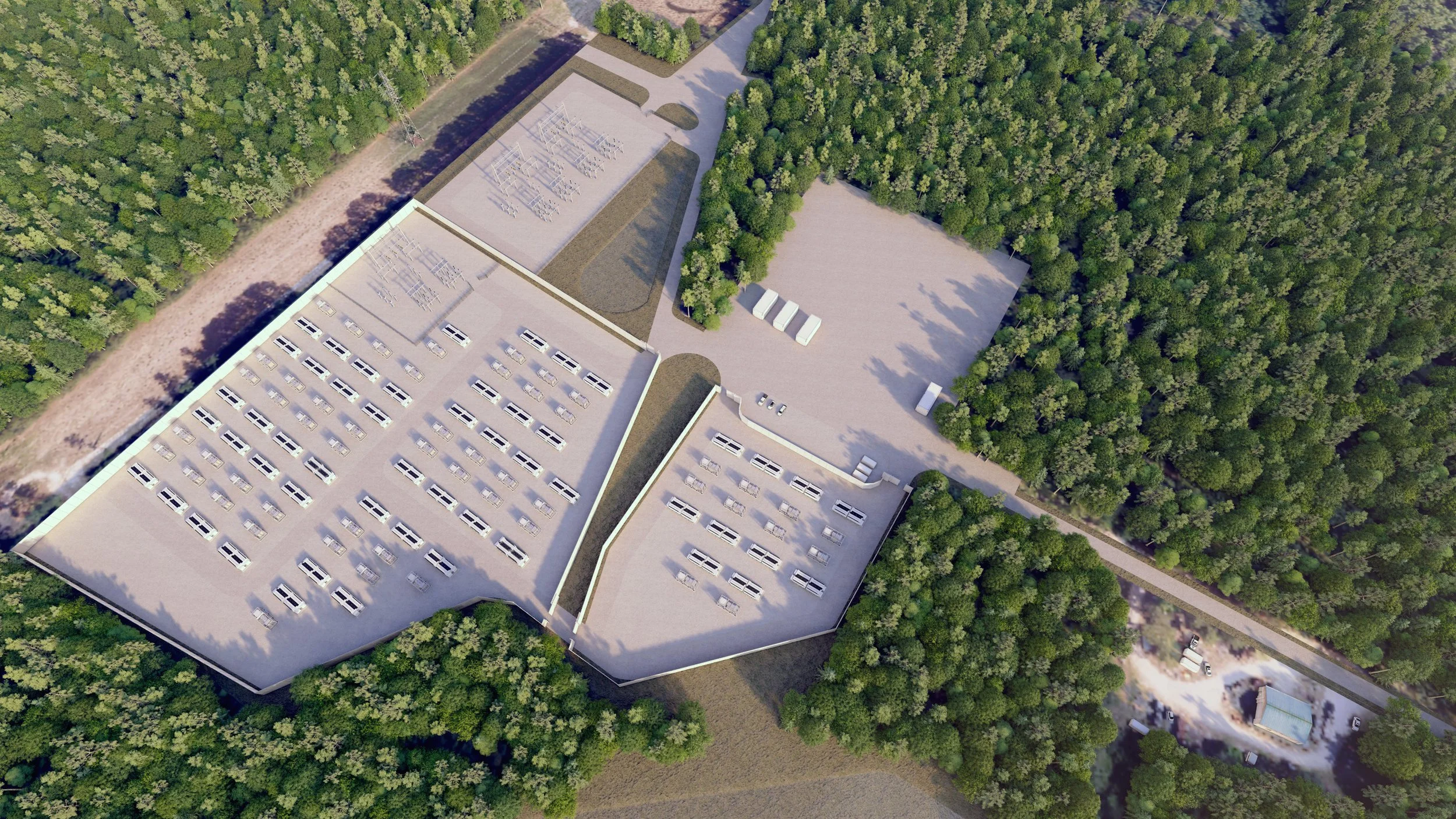
A proposed battery storage plant in Chesapeake meets the city’s requirements. Neighbors don’t see it that way.
By Elizabeth McGowan
For Virginia to comply with a bold, electric-grid-enhancing law mandating a gigantic increase in energy storage resources by 2045, utilities and developers must get cracking.
And it’s equally essential, clean power proponents say, that local governments temper neighborhood revolts such as the one that erupted last month at the Chesapeake Planning Commission.
Builders of a 150-megawatt, lithium-ion phosphate battery storage facility proposed for the city’s south side were caught off guard June 10 when the Planning Commission rejected it on a 7-1 vote.
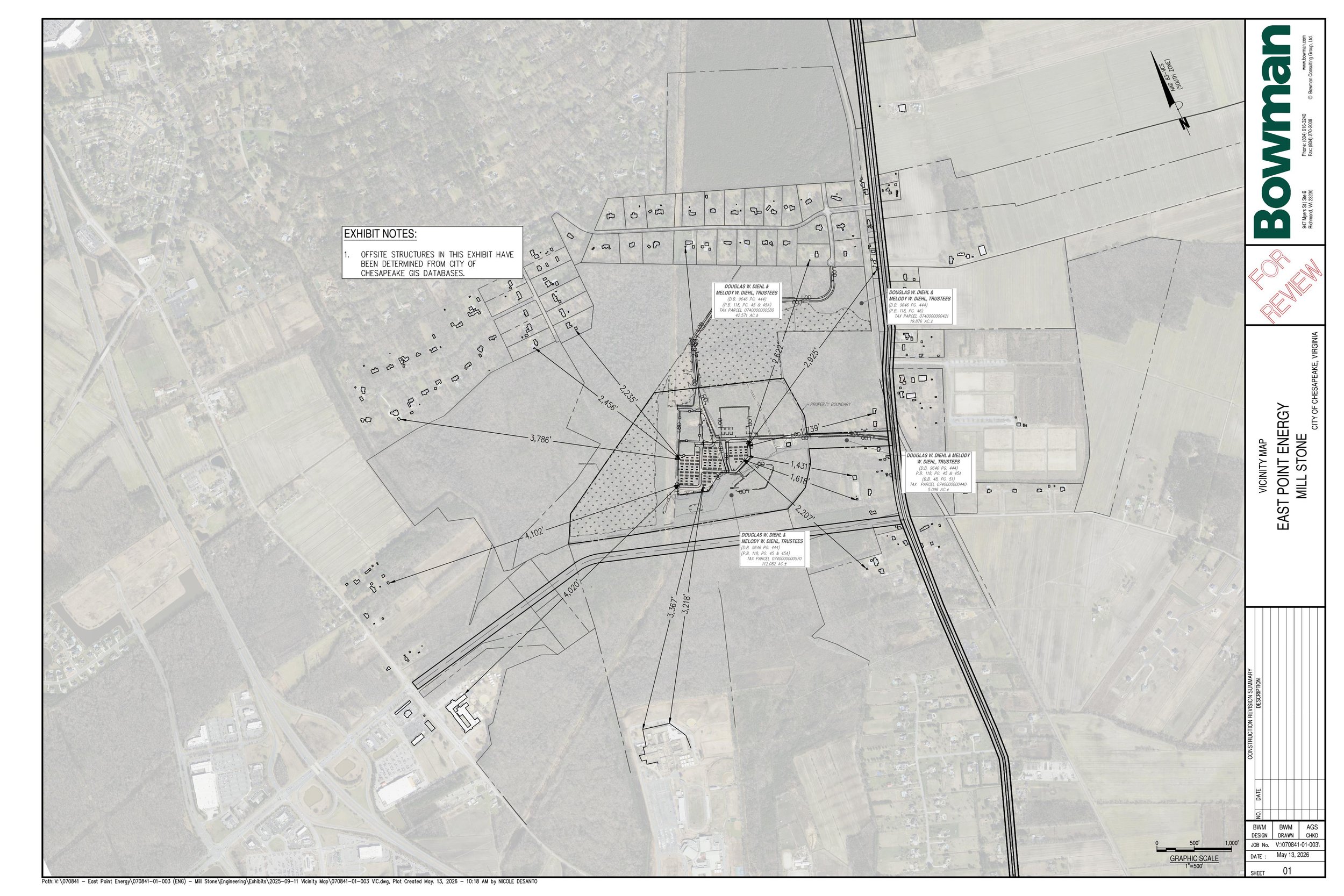
Site map of East Point Energy’s proposed project in Chesapeake, Virginia. Courtesy East Point Energy
Chesapeake planners recommended greenlighting the project, noting it meets the city’s long-term goals to encourage new energy technologies and diversify the tax base.
Nevertheless, commissioners seemed swayed by testimony from residents of Woodards Mill, a wealthy neighborhood closest to the site at 1912 Centerville Turnpike South. Opponents voiced concerns about the potential for noise and fire and how the industrial project could alter the community’s character.
That fierce pushback echoes recent NIMBY reactions to large solar arrays in rural Virginia.
In fact, after more than three dozen counties banned or severely restricted solar farms, the General Assembly passed a “solar standards” bill this year voiding community-wide prohibitions. The new law requires local governments to review all applications from solar developers. Now, if a permit is denied, officials must present their rationale to state utility regulators.
However, neither the no-ban-on-solar law nor the new law to mandate the scaling up of battery storage eliminated an age-old nemesis of energy projects – angry neighbors influencing local decision-makers.
The energy storage law, which took effect July 1, is a critical piece of Virginia’s broader effort to integrate more renewable energy into the grid and address rising electricity demand, affordability for ratepayers and grid reliability.
The measure calls for Dominion Energy and Appalachian Power, the commonwealth’s two largest investor-owned utilities, to expand energy storage to a combined 21,000 MW. That’s a sevenfold buildout from the 3,100 MW initially required by the 2020 landmark Virginia Clean Economy Act.
Big batteries hooked into the grid are an ideal technology for lowering customers’ electric bills and keeping the lights on during power outages, said Evan Vaughan, the executive director of MAREC Action, an association of Mid-Atlantic clean energy developers.
Batteries reduce the need for utilities to build expensive fossil fuel power plants. An advantage of batteries is that they pull electrons off the grid at night when customer demand is low and feed it back during high-use times.
“Virginia’s battery storage legislation is a real triumph,” Vaughan said. “It clearly lays down a line in the sand that Virginia wants to be a leader in battery storage and it removes any ambiguity for a tepid developer.”
Champions of the new law are pleased it also offers communities guidance on assimilating storage projects. The Virginia Department of Energy is leading the endeavor to design model battery storage ordinances for municipalities by Dec. 1. Relatedly, utility regulators at the State Corporation Commission plan to launch a working group of professionals to evaluate safety standards for battery siting and construction.
“We’re hopeful that the Department of Energy and state leaders take the working group findings out into communities,” said Richmond-based Energy Right CEO Skyler Zunk. “That’s an opportunity we missed with solar.”
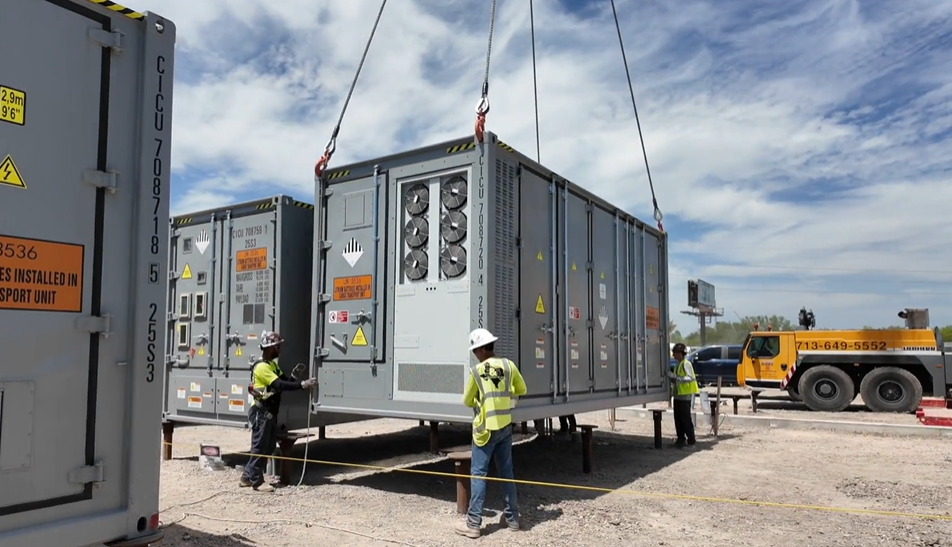
East Point Energy’s BESS install at Citrus Flatts in Harlingen, Texas. Photo Courtesy East Point Energy
‘Not going to be an eyesore’
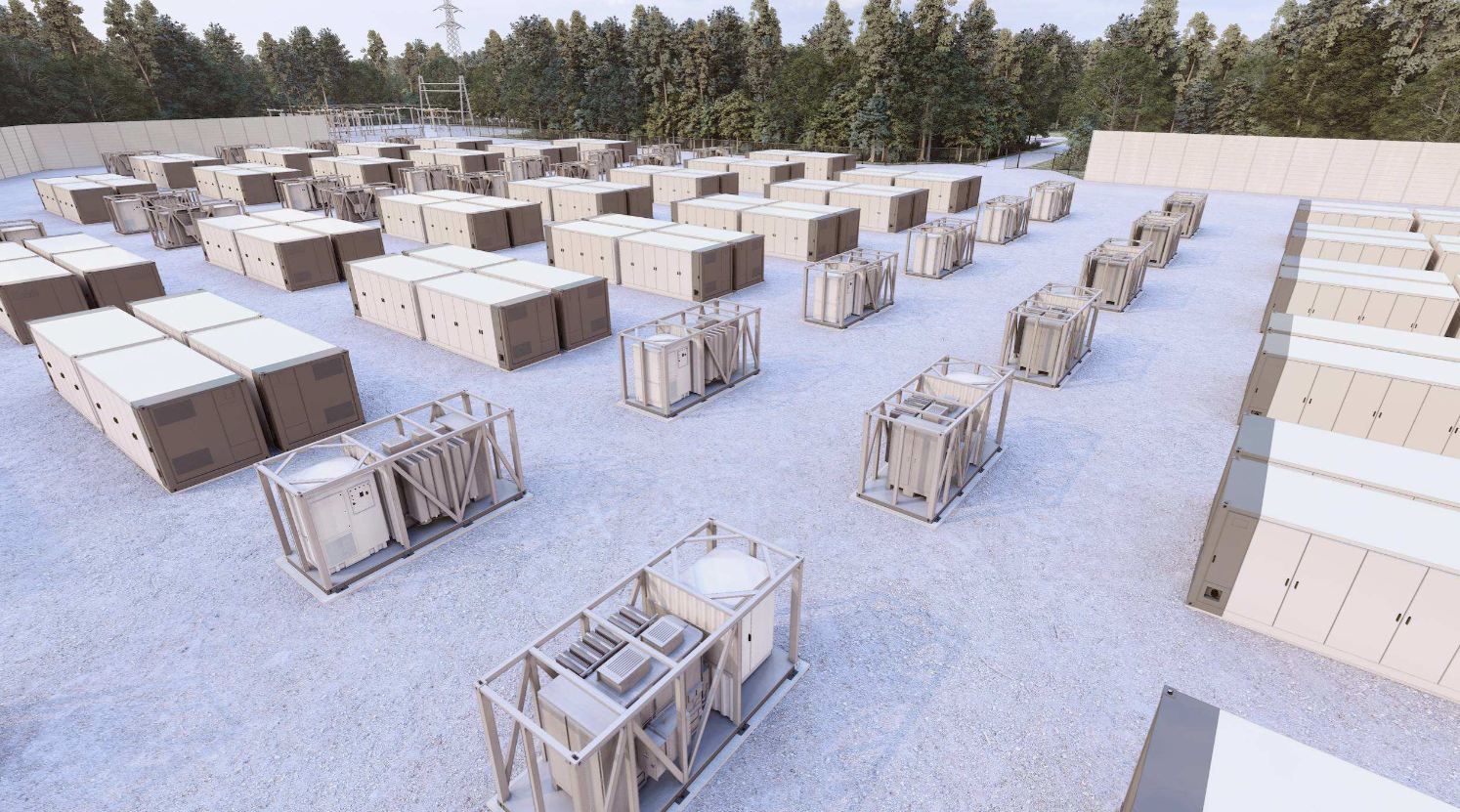
A rendering of East Point Energy’s proposed Mill Stone Energy Center the company hopes to build on 31 acres in Chesapeake, Virginia. Courtesy East Point Energy
In Chesapeake, East Point Energy is requesting a conditional use permit to build Mill Stone Energy Center on roughly 31 acres of a 112-acre, mostly wooded parcel zoned for agriculture. The planning commission’s denial was advisory; city council will have the deciding vote.

East Point vice president of project development Maggie Howe at the company’s office in Charlottesville, Virginia, July 14, 2026.. Photo by Christopher Tyree // VCIJ
East Point vice president of product development Maggie Howe said that despite the June turndown, her Charlottesville-based company will be advancing the proposal to the full council. Unless there’s a delay, that vote was initially scheduled for July 21.
“Yes, we are disappointed by the outcome of the vote, but will continue to engage with stakeholders,” Howe said in an interview.
Chesapeake Mayor Richard “Rick” West did not return several requests for comment.
However, deputy planning director Rebecca Benz said in an interview that her department recommended approval because it dovetailed with existing policy regulations and ordinances and was also compatible with the city’s comprehensive plan, Chesapeake 2045.
“They were strict but fair,” Howe said, noting that while the city requires a minimum property setback of 300 feet, Mill Stone would be 1,431 feet from the nearest home.
East Point, founded eight years ago and purchased in 2022 by international energy company Equinor, is no battery-storage rookie. It has two projects–one 9.9-MW and the other 100-MW – already operating in Texas.
In Northern Virginia, three East Point projects from 20 MW to 40 MW are under construction in Loudoun and Prince William counties.
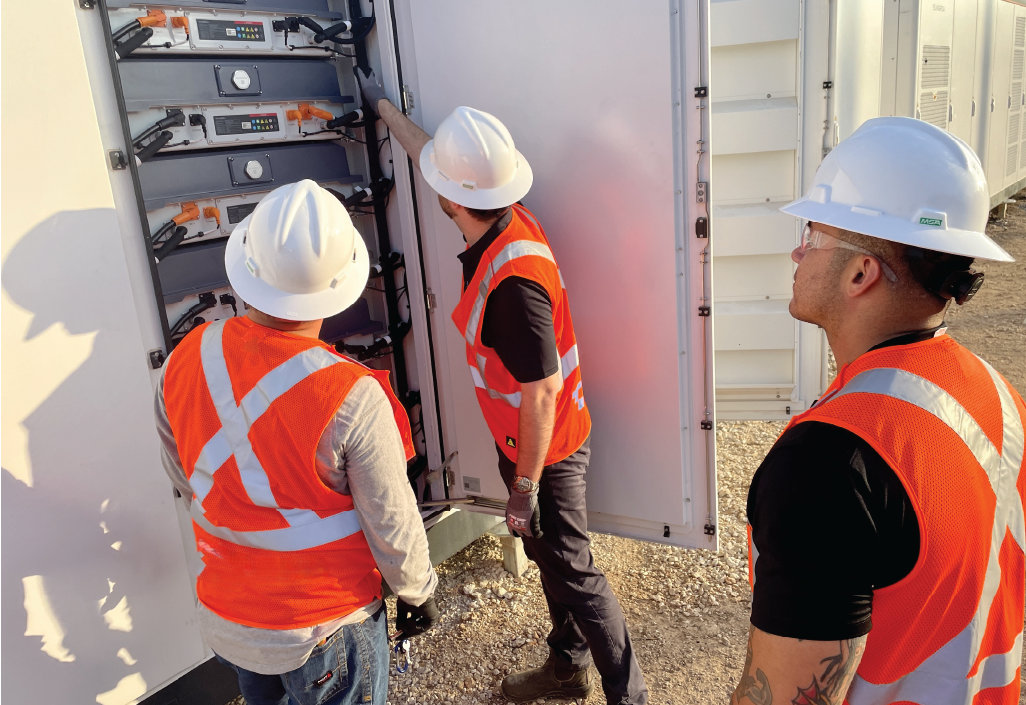
Examining the inside of an East Point Energy BESS at Sunset Ridge in Pearsall, Texas. Photo courtesy East Point Energy
If approved, Mill Stone would be Chesapeake’s second battery storage project, with construction set to begin in June 2029. The first, a 100-MW facility on eight acres near Dominion’s Yadkin Road power substation, is still under review.
Jeff Staples, a Chesapeake environmental advocate, spoke in favor of Mill Stone on June 10, joining 40 other supporters testifying in person or via written comments.
Twenty-two of the 35 people publicly urging the commission to vote “no” showed up at the meeting.
Unfortunately, Staples said, a “not-in-my-backyard” attitude has escalated as alarm about the unknown overlaps with rumors.
“Mill Stone is a good use for that land,” Staples said, adding that it’s expected to generate about $25 million in tax revenue over its 20-to-25-year lifespan. “It’s not going to be an eyesore.”
East Point plans to install a fence and sound barrier around the batteries and preserve a corridor along the western edge of a Dominion powerline easement for a future trail.
Stipulations also require the 80 or so acres without batteries to remain undeveloped. Further, data centers are prohibited on the property.
Virginia positioned to be a regional storage leader
Vaughan, of MAREC Action, said the new battery law puts Virginia on track to be the battery-storage leader among the 13 states served by PJM Interconnection, the nation’s largest regional transmission organization. Right now, that entire territory serving 67 million customers between Illinois and the East Coast has a paltry 400-plus MW of energy-storage capacity.
For perspective, California and Texas, both outliers on the energy storage front, have installed about 17,000 MW apiece.
PJM’s demand for electricity is expanding at a rapid pace. One monumental load driver is Northern Virginia’s “Data Center Alley,” the world’s largest concentration of power-hungry server farms.
Zunk and his fellow nonprofit staffers have spent much of the last four years presenting “technology 101” classes to help Virginians reach informed decisions about energy projects. Government officials and residents often don’t grasp the potential benefits of solar arrays and storage because nobody explained them clearly, he said.
“Fear of something new is human nature,” Zunk said. “We’ve gone through the same cycle with cell phone towers and grain silos.”
For instance, he added, model ordinances will encompass safety standards and directly address community worries about fire.
“People have lithium-ion batteries in their pockets all the time,” he said. “Batteries for storage are just at scale.”
Staples simply wants Chesapeake to be at the battery storage forefront.
After all, Mill Stone could power 120,000 homes for four hours during a power outage.
“If Mill Stone doesn’t get approved here, it will be approved in a community farther down the electrical lines,” he said. “That means their lights are going to stay on and ours won’t.”