The Richmond Electoral Board’s decision last week to limit early voting locations could force voters in majority Black precincts to travel more than two hours by public transit to cast their ballots ahead of election day, an analysis by the Virginia Center for Investigative Journalism at WHRO has found.
Read moreVirginia legislative candidates across Greater Richmond and Hampton Roads raised nearly $3.8 million in the last three weeks of June — mostly from big donors giving more than $10,000 to their campaigns.
Read moreA scaled-down Norfolk waterfront casino proposal is facing choppy waters from city leaders who have lost patience with the much-delayed project.
Norfolk City Council members in a recent closed session discussed options for scuttling the city’s agreement with the Pamunkey tribe, which submitted an application for a phased development with a $150 million initial investment, far shy of the upscale $500 million resort hotel, marina, entertainment space, and casino showcased to voters during a 2020 referendum.
Read moreThe overwhelming share of campaign funding in the low-turnout, yet expensive, primaries in Greater Richmond and the Hampton Roads came from political organizations, business interests and corporate-aligned political action committees, according to an OpenSecrets analysis of campaign finance reports. Most candidates who raised big-donor money won.
Read moreIt’s been decades since two Hampton Roads Democratic state senators, Louise Lucas and Lionell Spruill, were out of the public eye.
Lucas launched her political career in Virginia by winning a Portsmouth City Council seat in 1984. Spruill, a Chesapeake native, first won a seat in the Virginia General Assembly in 1994.
Both legislative stalwarts rose from poor backgrounds to become ambitious, long-standing powerbrokers in southeastern Virginia. On June 20, one will be out of a job.
Read moreVirginia’s maternal mortality rate leaped by 130% during the COVID-19 pandemic, according to an analysis by the Virginia Center for Investigative Journalism at WHRO. In 2021, women in Virginia died of pregnancy-related complications at a rate of 50.1 per 100,000 births, more than double the pre-pandemic rate in 2019, according to data from the National Center for Health Statistics. Virginia mothers died of pregnancy-related complications at a rate of 21.6 per 100,000 births in 2019.
The state also fared poorly compared to the U.S. average of 33 deaths per 100,000 births in 2021. Only Mississippi, Tennessee, Louisiana and Alabama had higher death rates of the 22 states with publicly available data.
Read moreThe road to adulthood begins for most when they graduate from high school and move on to a first job or college, to paying bills and living on their own. But for people with cognitive disabilities or autism, leaving high school is a more monumental step, one that will transform their relation to their families and the community that supports them.
That monumental step has been on the minds of Andrew and Barb Baxter, both 57, of Charlottesville, Va. for years. Their 24-year-old son, Peter, is on the autism spectrum and has an intellectual disability.
Read moreToxic chemicals used to fight fires and found in a wide range of household and industrial goods for decades have ended up in drinking water across the state. Virginia health and environmental agencies have only begun to measure the scope of the problem. How worried should we be?
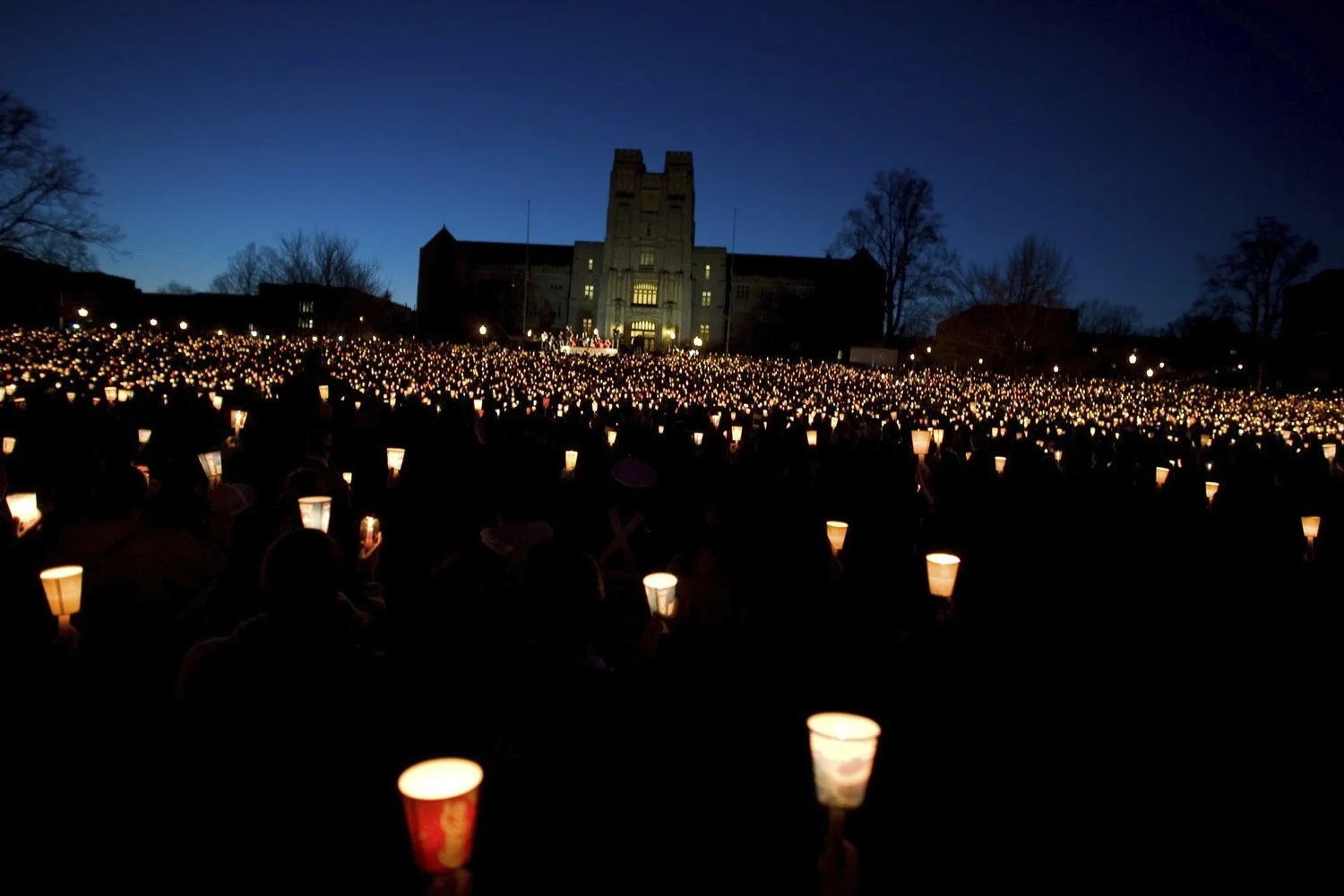
Read moreIn the wake of the 2007 Virginia Tech massacre, elected leaders vowed to prioritize campus safety.
Then-Gov. Tim Kaine appointed a blue-ribbon panel and within a year signed more than 30 mental health, school security and gun purchase bills aimed at preventing future mass shootings. Several appeals for stricter gun policies, however, were voted down.
More than 15 years later, in the aftermath of another school shooting — this time at the University of Virginia, where three students were shot and killed in November — state lawmakers considered a range of gun policy proposals: a ban on new assault-style weapons, new punishments for those who fail to secure their guns, an expansion of the state’s “red flag” law and restrictions on possessing firearms in school buildings.
But just one major safety measure survived: a $300 tax credit for firearms owners to purchase gun safes. A second bill requiring public universities to more quickly and comprehensively respond to a potential threat passed the House and Senate but still awaits Gov. Glenn Youngkin’s signature.
Read moreIn 2019, prospects for Ridley Place and its immediate surroundings seemed more promising after the area was selected for $30 million in redevelopment funds under the Choice Neighborhoods Initiative (CNI), a program funded by the Department of Housing and Urban Development (HUD). The initiative, which has grown to more than 40 programs nationwide, aims to rebuild communities by revitalizing public housing and assisted living.
The city planned to relocate more than 600 residents from Ridley Place, tear down the complex and replace it with mixed-income housing and offer residents the opportunity to come back when construction was completed. But a key part of the HUD program was supposed to address what happens to residents during the interim period while new housing is built, a phased process that in some cases could take up to seven years or more. Funding and local resources were set aside to help residents like Echanerry obtain services from organizations around the community to ease their transition, including transportation, childcare, food, health care, legal counseling, workforce preparation and job placement.
Correspondence between the city and HUD, however, revealed that although the grant was awarded to Newport News in May 2019, Ridley Place residents continued to struggle, even though the development program was supposed to provide support for them.
Read moreVirginia legalized limited growing and possession of marijuana by private individuals in 2021, but sale of recreational marijuana remains illegal. Gov. Glenn Youngkin, a Republican, has not signaled support for legalizing retail sales, and measures to set up a legal market failed this year in the General Assembly.
Read moreFollowing the back-to-back mass shootings at the University of Virginia and a Chesapeake Walmart, Republicans and Democrats are touting proposals to help prevent future tragedies – again.
Virginia state Sen. Creigh Deeds, D-Bath, said he intends to file legislation to ban new assault weapons and launch a gun buy-back program.
Read moreA University of Virginia student has been caught and charged with murder in the Sunday night shooting that left three university football players dead and wounded two other students.
Christopher Darnell Jones Jr., 22, was apprehended by Virginia State Police Monday, hours after the mass shooting put the campus on lockdown, stranding students and members of the university community across the grounds in libraries, campus buildings and dorms.
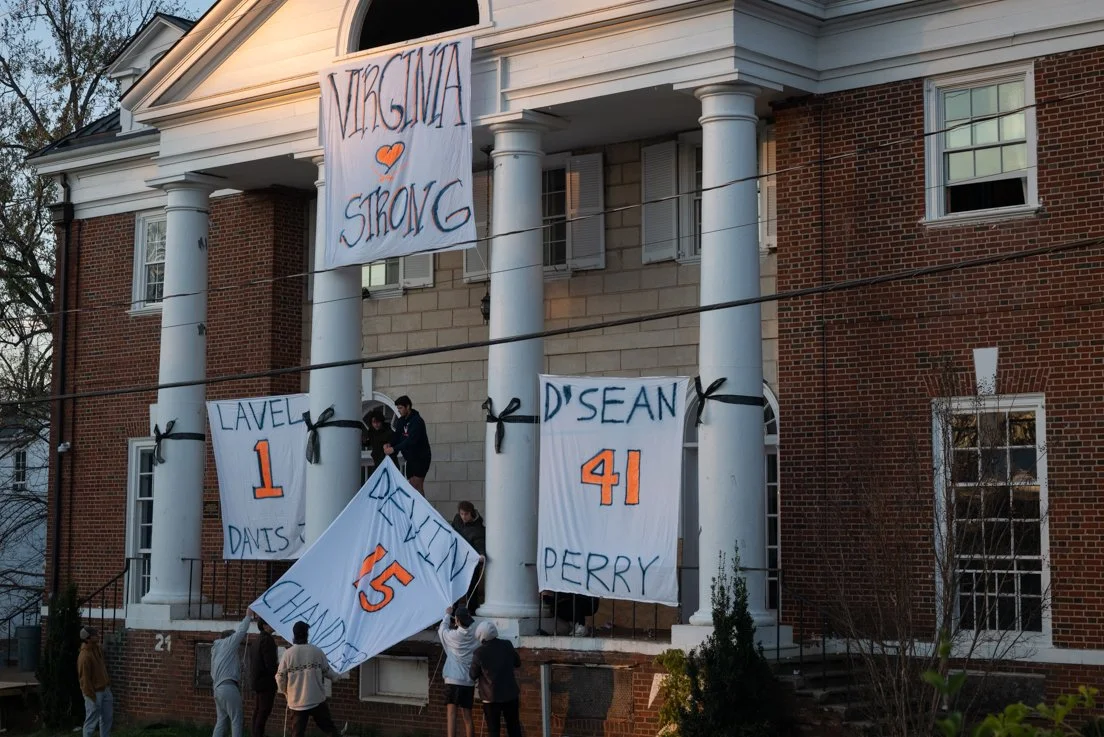
The shootings took the lives of three members of the Cavalier football team: D’Sean Perry, a 4th year linebacker from Miami; Lavel Davis Jr., a 3rd year wide receiver from Dorchester, S.C., and Devin Chandler, a 2nd year wide receiver from Huntersville, N.C.
Read moreJames L. Rivers grew up in Norfolk in the 1950s and 1960s - a southern city with opportunities and obstacles for a young Black man.
Rivers was the first generation in his family to graduate from college, earning degrees in chemistry and mathematics from the Norfolk branch of Virginia State College, the predecessor to Norfolk State University. But, as Black man, he also had to pay a poll tax before he could vote for the first time in the early 1960s.
He became active in the civil rights movement as a student at Booker T. Washington High School. He met Martin Luther King Jr., joined sit-ins at segregated lunch counters, and fought to bring voting rights to Black Virginians.
His calling to civil rights continued through service in the Navy, a long career as a counselor in Virginia prisons and jails, and decades of work with the Norfolk chapter of the NAACP, where he served as president. He’s been a deacon at New Calvary Baptist Church in Norfolk for four decades.
Read moreUsing gravity, and some rather strong mules, self-taught civil engineer Moncure Robinson moved a cart of coal along a set of rail tracks he designed in 1831. From a coal seam in Midlothian, Robinson guided his cargo 13 miles away to Manchester's wharves on the James River—making Virginia’s Chesterfield Railroad one of the first to operate in the United States and stoking Virginia’s economic engine.
Towns built on the rails became strings of small, economic dynamos stretching across the commonwealth, supporting good jobs - in transportation, manufacturing, extraction industries and even tourism.
For many of these hamlets, the hey-days are long past. What happened to Virginia’s railroad towns? Who lives by the tracks today? How deep is the poverty? Where are there signs of regrowth and hope? Have old dividing lines between the right and wrong sides of the track changed?
Read moreThe hopes and dreams of young first-time buyers often crash into the waking horror of today’s real estate market. Driven by an influx of millennials, low interest rates and the scarcity of “for sale” signs planted in the suburbs and cities, Virginia housing prices rocketed during the pandemic. Supply has scraped record lows, driving bidding wars on properties even as interest rates have more than doubled in the past year.
Read moreThe Virginia Center for Investigative Journalism at WHRO has been awarded a Local Reporting Network grant from ProPublica. The grant will support work by journalist Brandi Kellam, an Emmy-award winning reporter who has produced national stories for CBS News.
Read moreIn a comparison of housing prices and local wages, Hampton Roads is less affordable than other major Virginia metros, similarly sized metro areas on the East Coast and even the Washington, D.C. area.
Read moreDespite historic changes in educational and economic opportunities, the share of U.S. physicians who are Black men has remained unchanged since 1940. Virginia medical schools are still struggling to attract talented young men – a key to building trust between healthcare providers and the Black community.
Read moreThe Virginia Center for Investigative Journalism is excited to announce that it has become part of the growing news operation at WHRO Public Media.
Launched in 2019 by veteran Virginia journalists Christopher Tyree and Louis Hansen, VCIJ has been offering enhanced news coverage and in-depth reporting on issues vital to residents of the commonwealth.
“VCIJ started as an effort to bring quality, independent journalism to growing news deserts in the state,” Hansen said. “Investigative journalism is vital to a functioning democracy. We want to bring to light issues that have been under-covered, and serve as a watchdog for the community. Our partnership with WHRO enhances and expands our mission.”
“It was clear after talking with citizens, that Virginians wanted a trustworthy news source looking out for them,” Tyree said. “As an independent news organization with a statewide focus, our coverage of important issues will continue to give Virginians the information and tools they need to be active participants in our representative democracy.”
Read more