

George Washington believed the House of Representatives should be close to the people. The Founders failed to anticipate a century of Congressional stagnation with a fast-growing population.
By Philip Shucet
Virginia voters approved a constitutional amendment in April 2026 to redraw the state’s 11 congressional districts. The Virginia Supreme Court then voided the decisive result on procedural grounds. The U.S. Supreme Court declined to intervene in the state conflict.

After an $85 million campaign, Virginia's congressional map remains unchanged.
The battle to redraw district lines is a symptom. An underlying problem — a House of Representatives frozen at 435 seats for more than a century — is one the Framers never anticipated.
Fights over representation in Congress are not new. They began at the 1787 Constitutional Convention in Philadelphia, as soon as James Madison's Virginia Plan was introduced as the basis for a new constitution.
But the Founders were focused on representing people, not political parties.
Madison's initial plan called for a bicameral national legislature: a House of Representatives and a Senate. Membership in each chamber would be determined by state population, and each member would have an equal vote. The people would elect the House; House members would elect the Senate.
This was a major departure from the Articles of Confederation that initially bound the states.
Under the Articles, representatives in the unicameral national congress were selected by the state legislatures. Each state had one vote regardless of its number of representatives. Delaware carried the same weight as Virginia; Rhode Island was the political equal of New York.
Inside the Philadelphia State House, the constitutional delegates were at a standoff.
The smaller states fought to maintain equal representation in both the House and Senate. The larger states argued for Madison's plan and proportional representation in both chambers.
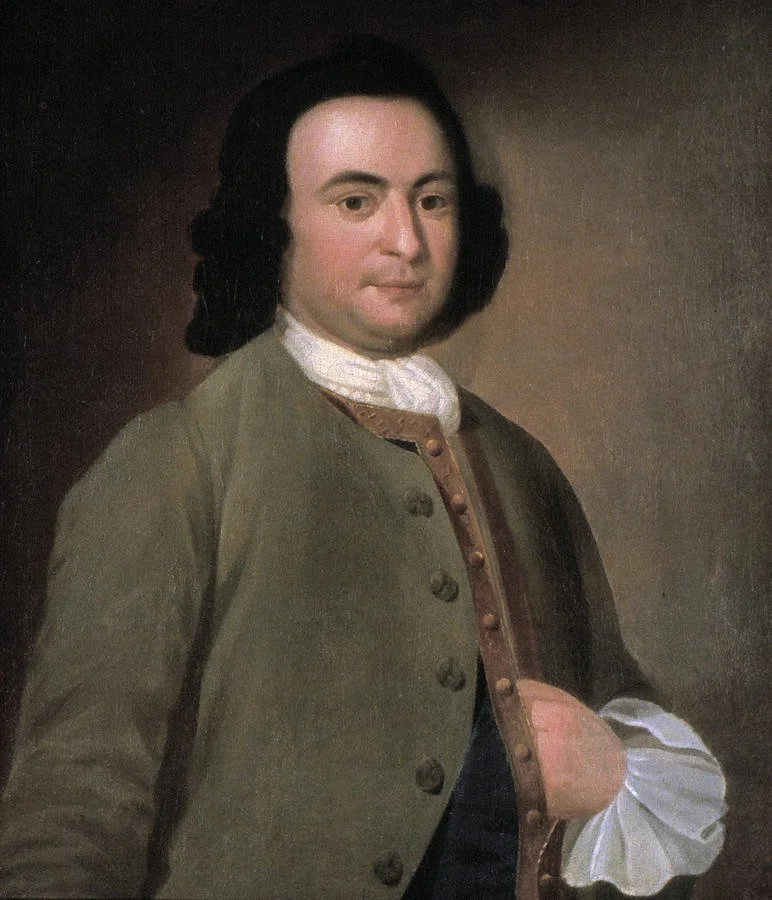
George Mason
Some delegates believed a state's number of representatives should reflect the state’s wealth — tax contribution or property. Others insisted that the number of representatives in the House should be determined by a state's population.
The convention seemed deadlocked.
George Mason of Virginia echoed the seriousness of the stalemate. Mason said he would "bury his bones in this City [Philadelphia] rather than expose his Country to the Consequences of a dissolution of the Convention without any thing being done."
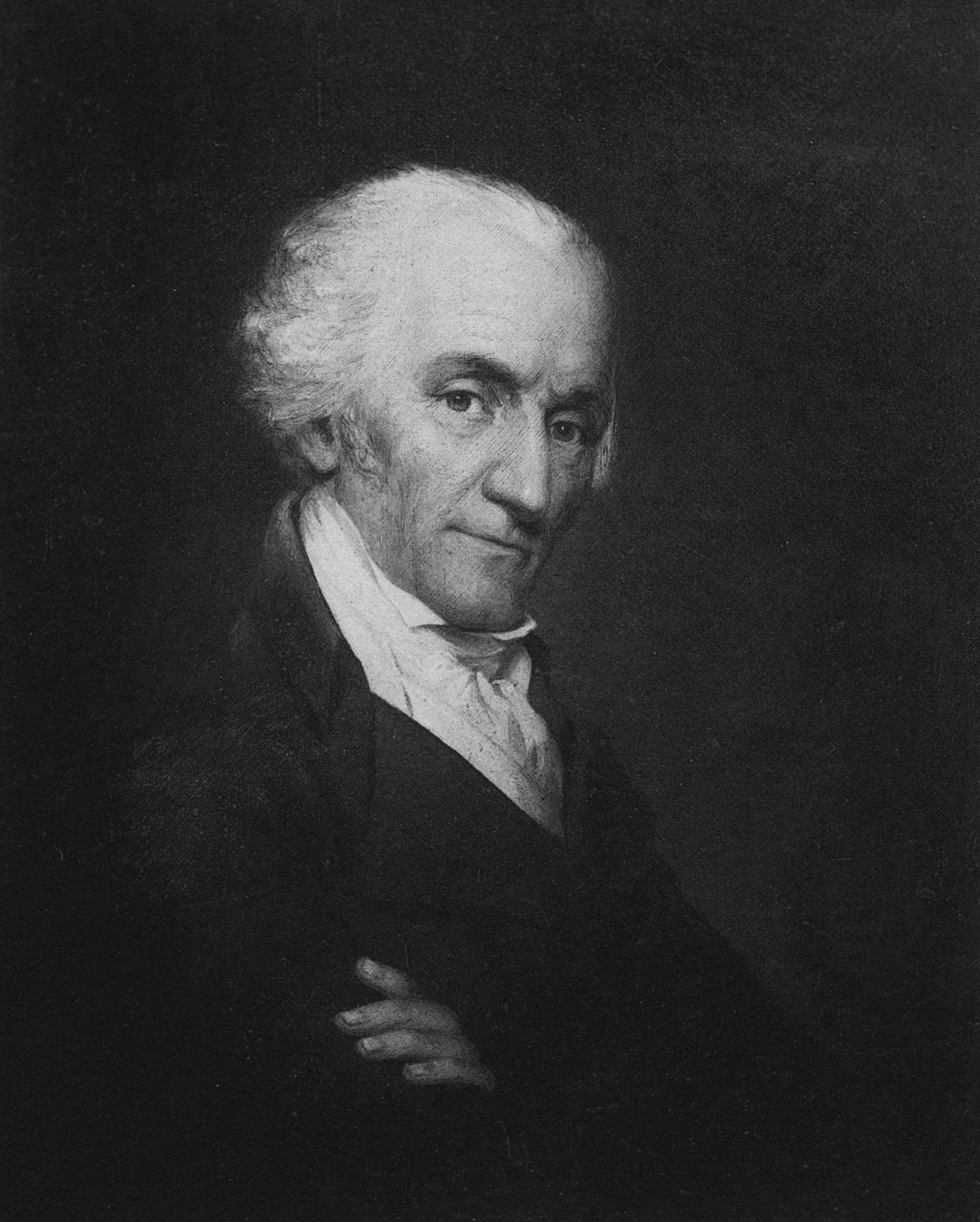
Elbridge Gerry
Massachusetts delegate Elbridge Gerry put a sharper edge on the situation: "If we do not come to agreement among ourselves, some foreign sword will probably do the work for us."
Alexander Hamilton, frustrated with the deadlock, left the convention in late June and went home to New York. He returned to Philadelphia for one day in August, again departed, and returned in September. John Lansing and Robert Yates, also from New York, left in July and never returned to the convention.
George Washington worried that the convention was falling apart. Writing to Hamilton, Washington noted that matters had continued to deteriorate. “In a word, I almost despair of seeing a favourable issue [outcome] to the proceedings of the Convention,” he said.
Roger Sherman and Oliver Ellsworth of Connecticut led a compromise that narrowly averted disaster: Members of the House would be popularly elected, with membership apportioned by population. One member would represent every 40,000 people counted in the census. The states would be represented in the Senate by two senators from each state, regardless of population. Apportioned representation in the House; equal representation in the Senate.
The compromise carried 5-4. Virginia voted “no.”
Delegates from the states opposing the compromise met the following morning to consider mounting a challenge to equal representation in the Senate. But they agreed to proceed rather than have the convention fall apart.
On the final day of the convention, Nathaniel Gorham of Massachusetts suggested that one House member for every 40,000 people be changed to one for every 30,000, "for the purpose of lessening objections to the Constitution."
As president of the convention, Washington had not participated in the debates. But hearing Gorham's suggestion, Washington stood and urged the delegates to approve Gorham’s motion. "It would give much satisfaction to see it adopted," Washington said, affirming his desire for smaller districts.
Without debate or discussion, the delegates unanimously adopted Gorham’s revision.
Virginia's James Madison said the country should guard against the House being too small or too large in Federalist No. 55.
And stating his fear that passion would overcome reason in large assemblies, Madison said, "Had every Athenian citizen been a Socrates, every Athenian assembly would still have been a mob."
After the 1790 census, Congress apportioned 105 seats to the House when the U.S. population was just under 4 million. By 1910, the population was about 92 million and Congress apportioned 435 seats to the House.
The census ensured that the people's representation in the House grew as the population of the United States expanded. For most of the country’s history, it was clear that the House would grow with the population.
The House grew for 120 years. Then it stopped.
The 1920 census recorded two significant findings. The country’s population grew from 92 million in 1910 to 105 million, in part due to an influx of immigration. For the first time, the majority of people lived in urban rather than rural areas.
Sixty new seats needed to be apportioned to the House to keep any state from losing a representative, an increase that would have pushed the size of the House to just under 500 members.
Congress stalled.
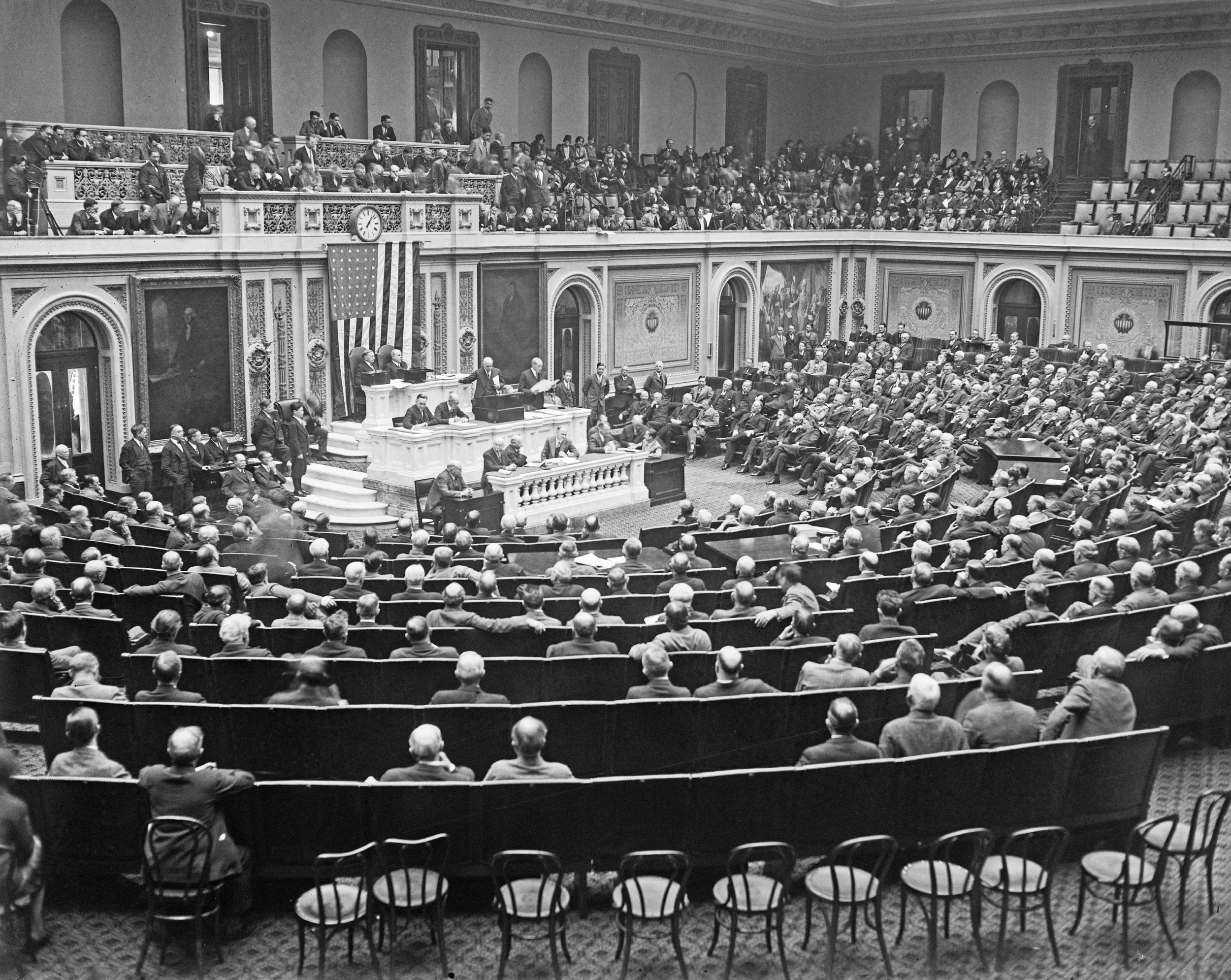
House of Representatives circa 1929. Source // Alamy
The stalemate was broken in 1929 when Congress passed the Permanent Apportionment Act, freezing the House at 435 members.
A June 8, 1929, story in the Richmond Times-Dispatch laid out the consequences of the Act. Eleven states gained seats, while 16 states were losers. Virginia's representation decreased from 10 to nine.
Virginia moved back to 10 seats in 1940 and has been at 11 seats since 1980.
And as the population of each state grew, so did the average number of individuals represented by each member of the House. In Virginia, a House member represented about 220,000 individuals after the 1910 census; by 2020, over 780,000 Virginians.
With the number of House seats fixed at 435, reapportionment is now a zero-sum game.
The partisan spending on Virginia's redistricting battle would not amplify the state’s voice in Congress. It would merely choose who would do the shouting.
Congress has made a political choice – not a constitutional stand – to limit its membership.
Washington urged smaller districts. Madison preached balance between too few and too many. Gerry's name became a verb. The Founders eventually agreed that representation should grow with the country.
Mason, an influential voice at the Virginia ratification convention, wanted the House members to be as close as possible to their constituents. A representative, he said, "ought to mix with the people, think as they think, feel as they feel . . . and [be] thoroughly acquainted with their interest and condition."
Reach Philip Shucet at philip.shucet@philipshucet.com
Philip Shucet spent decades running large public institutions — the Virginia Department of Transportation and Hampton Roads Transit — during periods when they were under strain. He understands how they are built, how they break down, and what it takes to rebuild them. He is a graduate of Virginia Tech and the Columbia University Graduate School of Journalism. He has begun doctoral research in law and policy.