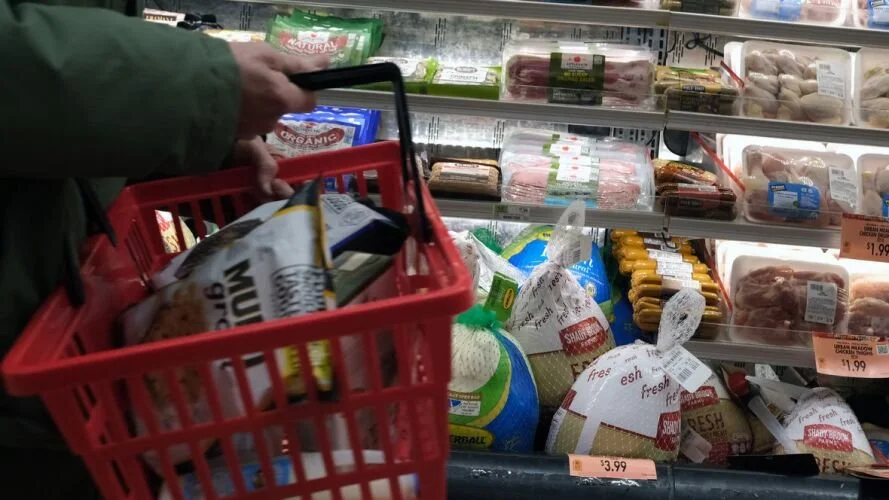
U.S. tariffs and immigration enforcement have challenged Virginia farmers as the harvest season ends. For one Virginia farmer growing soybeans and tobacco, the next season seems uncertain.
Read moreFor Virginia foodbanks, growing demand amidst federal cuts
Pansy Frye and other volunteers load boxes of nonperishable goods for area seniors as part of a federal program at the Blue Ridge Area Food Bank distribution center in Charlottesville, Tuesday, November 12th. Photo by Christopher Tyree
The Trump administration canceled 94 million pounds of food aid in recent months. Here’s what didn’t make it to Virginia charities.
Read moreFederal cuts and shutdown heighten food insecurity across Virginia
SNAP beneficiaries will temporarily receive assistance through the Virginia Emergency Nutrition Assistance as government shutdown locks up funding for the federal program. Photo by: Spencer Platt/Getty Images
Federal actions hit hardest on needy families in small cities and rural, southwest counties, according to a VCIJ at WHRO analysis.
Read moreUnder Trump, a lifeline for young women in rural Virginia fights to survive
Since 1967, Job Corps has been a fixture in Marion, Va. The residential campus on Main Street has trained generations in health care skills. Despite bipartisan support under previous administrations, the Trump administration is trying to close it.
Read moreVirginia foster care gets new reforms, funding for family caregivers
Vicki Lightfoot stands by the front door with Maurice and Marie while waiting for the other grandchildren, Alysha and Corey, to finish getting ready for school. The two youngest kids go to daycare while the two eldest attend elementary school, giving Lightfoot time to relax and study for her classes. File photo by Hadley Chittum // VCIJ
For decades, Virginia has ranked poorly among states for providing financial support for kinship carers — grandparents, aunts, uncles and other family members raising children who are their relatives. And a critical state report found many social services departments in Virginia have failed to provide enough oversight and protection for children in the care of their relatives.
Starting July 1, bipartisan legislation signed by Gov. Glenn Youngkin tackles some of these problems by establishing an aid program and protective guidelines for kinship care families.
As the opioid epidemic persists, Virginia’s foster care support falters for families
Vicki Lightfoot washes dishes while Maurice plays on the floor by her side early in the morning before school. Lightfoot was solely responsible for getting all four children ready for daycare and school.
A Richmond-area retiree raises four grandchildren, struggling to pay bills and navigate the tangled bureaucracy of kinship care
Relatives caring for children in Virginia are far less likely than caregivers in other states to have help from the foster care system for child care, counseling, grocery bills and other needs. About 12% of the children in Virginia’s foster care system live with relatives and receive support from the system, according to state data, far below the national rate of 33%.
Virginia Voices // When Isolation is both the Problem and the Solution
Laura Beth Weaver is the executive director of the Women’s Resource Center in Radford. The center provided services to over 4,000 people last year, a rise of about 12% over 2019. Photos by Stephanie Klein-Davis
Laura Beth Weaver began working at the Women’s Resource Center in Radford, Va. in 2011 and was promoted to director in 2019. The non-profit center has been providing shelter, counseling and programs to adult and child victims of sexual and domestic violence since 1977.
On March 10th, Weaver was a new director finishing up a strategic planning retreat with her staff and their executive board. They left excited about all the things they planned to accomplish in 2020. On March 11th, the World Health Organization declared Covid-19 a pandemic.
Immediately, Weaver decided she couldn’t allow her community to feel like they had to choose between staying at home in an abusive relationship or reaching out for services and shelter during the health crisis.
Read more