
If approved by the school board, new rules could dramatically limit the use of a controversial practice of student isolation
By John-Henry Doucette
Virginia Center for Investigative Journalism at WHRO
The Virginia Beach School Board may ban the use of seclusion rooms in city school buildings, a step to curtail the controversial practice of isolating troubled students in emergencies.

Julie Xirau, in her Newport News, VA apartment, holds her phone showing a picture of her son Josh Sikes. Photo taken in March 2025. File photo by William Tiernan.
The board is scheduled to vote Tuesday on new policies for seclusion and restraint, a related practice. The vote comes after months of scrutiny spurred by revelations about the treatment of Josh Sikes, an 11-year-old boy with autism.
As the Virginia Center for Investigative Journalism at WHRO first reported, Josh died at home in November 2024, days after being placed in a makeshift seclusion area within Pembroke Elementary School. After an outburst in class, Josh was placed in a confined area constructed with furniture and straps.
His classroom was overseen by Southeastern Cooperative Educational Programs, a regional public provider of special education services in Virginia Beach and seven other Hampton Roads communities.
SECEP and four of its employees now face a $150 million wrongful death lawsuit that claims injuries Josh suffered within the area contributed to his death. The state medical examiner ruled he died of natural causes related to a seizure disorder.
The policy under discussion in Virginia Beach does not address the sort of area Josh was kept in. Last year, SECEP Executive Director Laura Armstrong said an “impromptu” seclusion area described in the VCIJ report was not allowed in any classroom.
The new policy would ban authorized seclusion rooms meant to keep students and others safe in emergencies. However, it still allows for the use of seclusion in emergencies such as preventing “serious physical harm or injury” to the student or others.
Virginia Beach has only two locations with authorized seclusion rooms – at the Renaissance Academy and within a wing at Windsor Woods Elementary School – both operated by SECEP. There are five rooms between those two locations, according to division officials. The proposed rules would apply to the SECEP programs operating within city school buildings.
A three-member school board policy panel unanimously recommended the change Jan. 28 after adding language about seclusion rooms, including those overseen by district contractors such as SECEP. On Feb. 10, Kami Lannetti, the attorney for the school district, told the board, “they will then have to find another method to deal with the children’s issues that led to use of the seclusion rooms.”
Armstrong did not respond to a request by VCIJ seeking comment about the proposal.
In Virginia code, seclusion is “the involuntary confinement of a student alone in a room or area from which the student is physically prevented from leaving.” Another emergency response, restraint, restricts a student’s movement. They are meant to prevent serious harm to a student or others during a crisis.
The practices are disproportionately used with special education students, according to federal data and advocates. Recent state data show that more seclusion instances occur at special education private schools than in public school districts in Virginia.
Seclusion increasingly has fallen out of favor, with some states banning its use in schools. In Virginia, some districts have ended or limited the use of seclusion. Norfolk, also served by SECEP, doesn’t allow seclusion.
Virginia Beach had 271 seclusions in the 2024-25 school year. All but one involved SECEP programs, according to information obtained through a records request. It’s the highest number among Virginia divisions, according to state data.
Three other cities SECEP serves reported seclusion incidents that year – Chesapeake (143), Suffolk (18) and Franklin (2) – though state data doesn’t say whether they involved SECEP. Norfolk, Portsmouth and Isle of Wight and Southampton counties reported none.
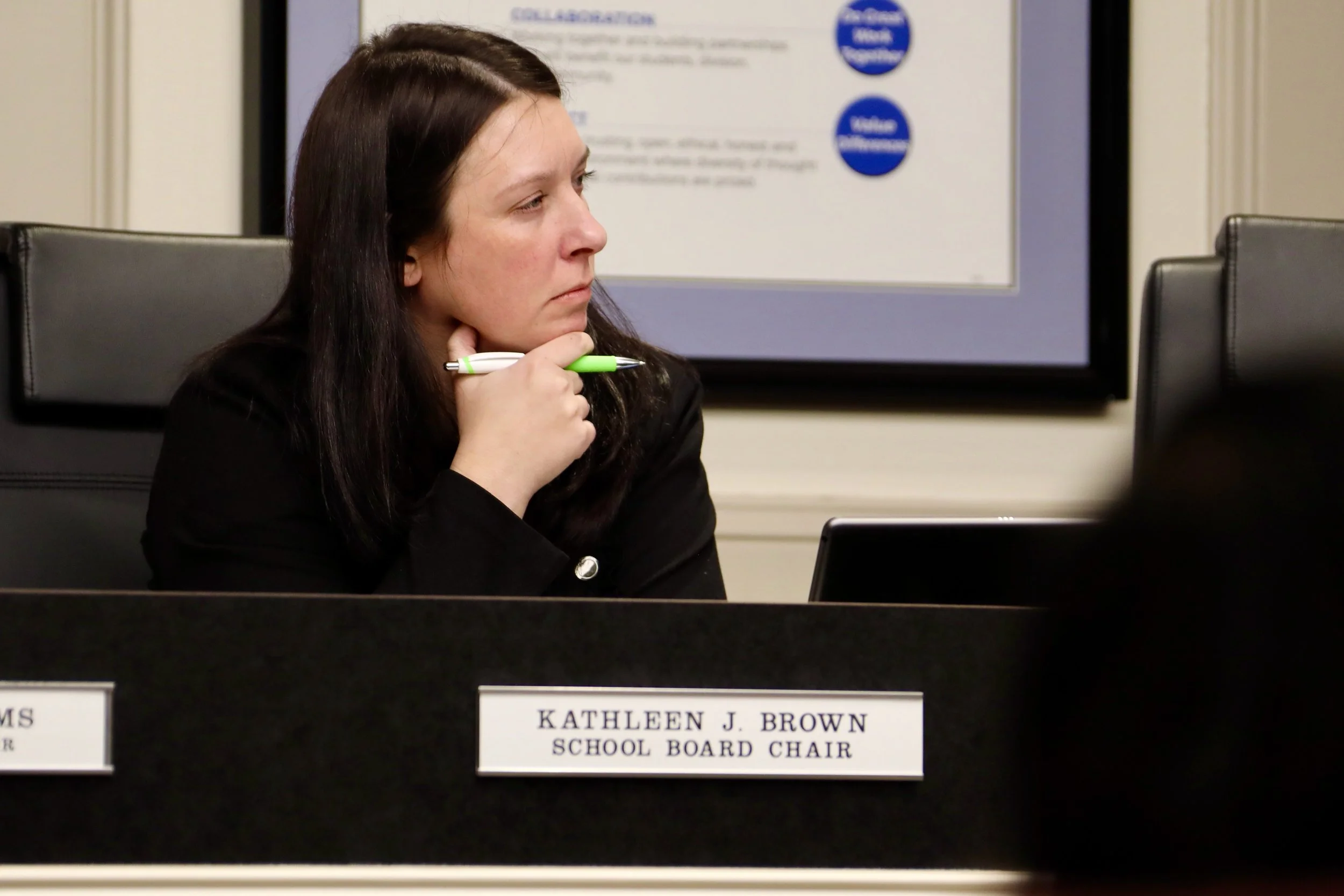
Virginia Beach School Board Chairperson Kathleen Brown told VCIJ the policy would address concerns by parents of special education students that their children are more likely to be placed in seclusion.
“If there are unintended consequences, then we would want to know that so that we can adjust and, you know, find a different path,” Brown said. “We owe it to the families and the students to at least try to find that path.”
Advocates told VCIJ change would be welcome.
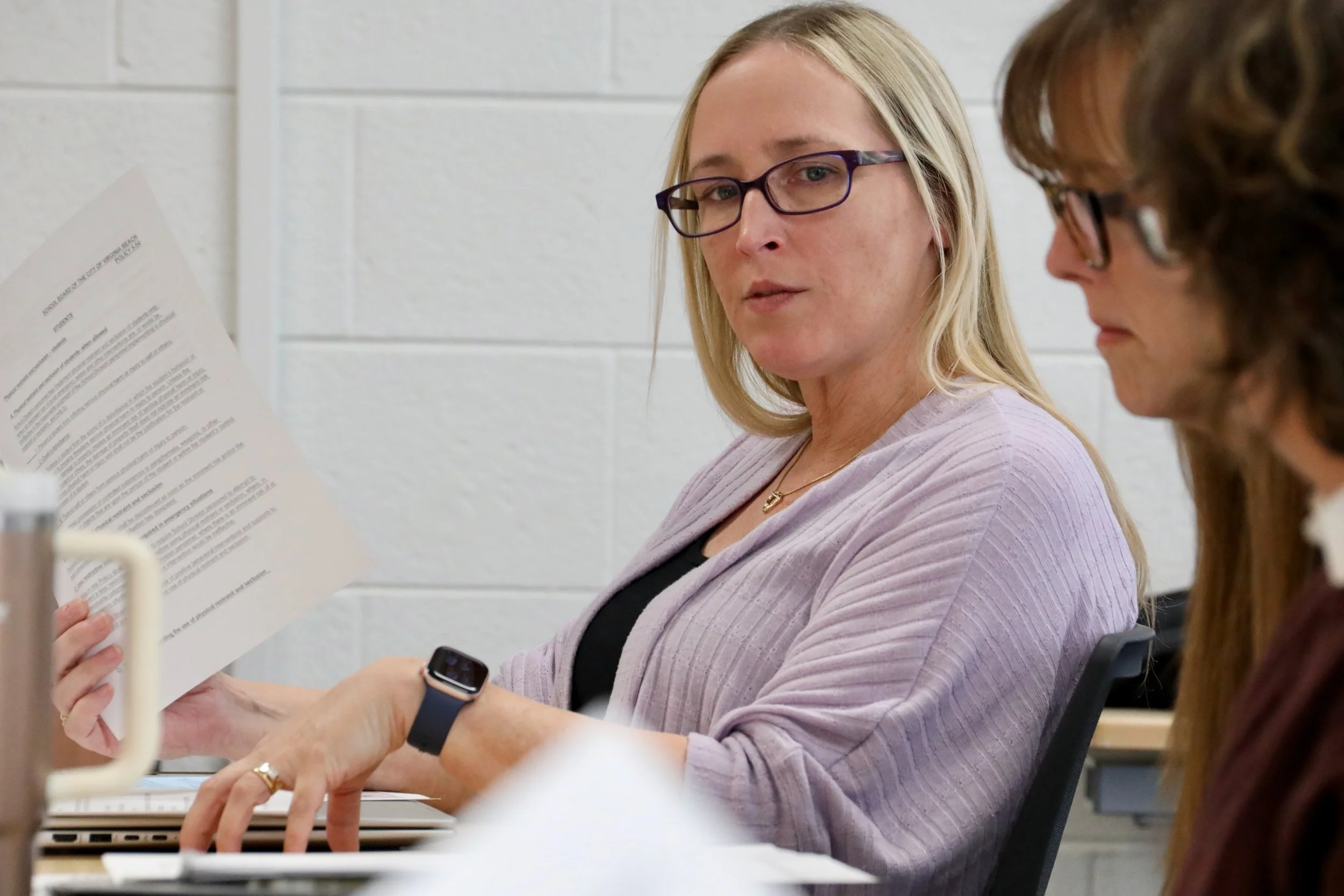
Meghan Ashburn, chairperson of the Virginia Beach Special Education Advisory Committee, said the policy proposed in Virginia Beach would reduce the number of seclusion incidents. Photo taken at a January meeting. Photo by John-Henry Doucette // VCIJ
Meghan Ashburn, chairperson of Virginia Beach’s Special Education Advisory Committee, said the new policy should reduce the use of seclusion and make SECEP review its practices.
The committee, which includes parents of special needs children, recommended last year that Virginia Beach schools ban seclusion outright. Virginia Beach should be able to align its policy more closely with Norfolk, Ashburn said.
Last month, Armstrong told members of the SEAC that seclusion is meant to keep staff and students safe. “Please understand that this is not about using something as a strategy to control behavior,” Armstrong said. “It’s only used when there’s imminent risk.”
Earlier this month, Kim Melnyk, a Virginia Beach School Board member who serves on the SECEP joint board, urged her colleagues to visit SECEP and talk with administrators.
“What is going to happen with students if a seclusion room cannot be used?” Melnyk asked. “Because we’re talking about students with a lot of needs. And I'm not saying that I agree with seclusion rooms. What I'm saying is, what happens if a student is throwing desks or chairs across the classroom? What happens? And what does a teacher do in response to that?”
A school administrator told the board members that SECEP has been able to work around the restrictions in Norfolk.
Reach John-Henry Doucette at John.Doucette@whro.org
Virginia Beach Public Schools are a member of the Hampton Roads Educational Telecommunications Association, which holds WHRO’s license.